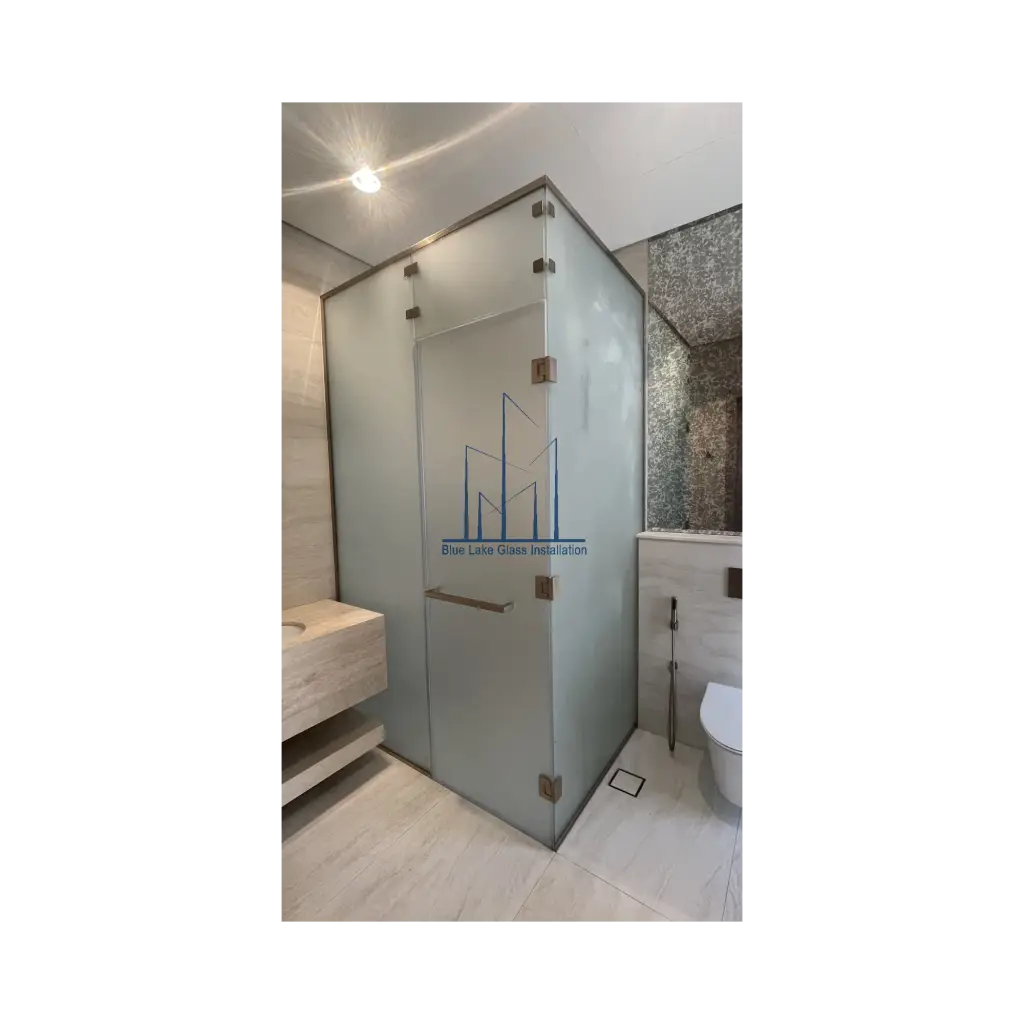
Best Glass for Shower Enclosures in Dubai: Clear, Frosted, Fluted & More
Compare shower-glass types, finishes and thicknesses before choosing the right option for privacy, appearance, hardware and bathroom layout.
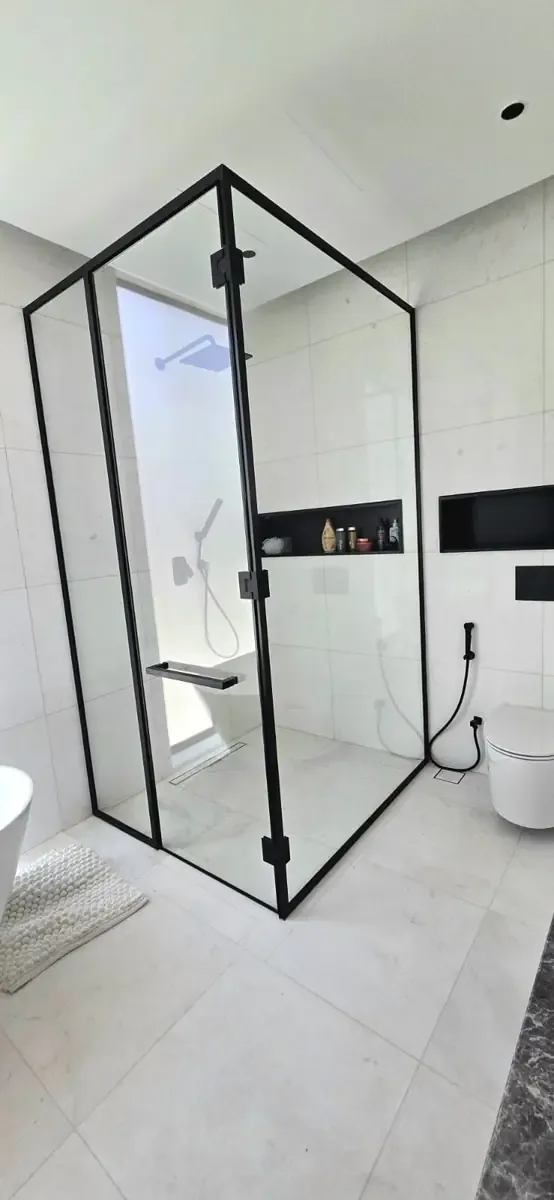
The best shower glass depends on what you want from the bathroom. Choose clear glass for an open look, low-iron glass for greater visual clarity, frosted glass for more privacy, fluted glass for texture, and tinted glass for a darker decorative effect. Thickness is a separate decision and should be matched to the panel size, support, opening method and hardware.
Choosing shower glass is not only about deciding whether the enclosure should be frameless or framed. The glass itself changes the way the bathroom looks, how much privacy it provides and how visible the tile and fittings remain.
Blue Lake supplies and installs custom shower glass in Dubai with clear, low-iron, frosted, tinted and fluted options. For a broader overview of enclosure layouts, see our shower glass Dubai guide.
1. Shower glass types at a glance
| Glass type | Best for | Main visual effect | Privacy |
|---|---|---|---|
| Clear glass | Open, bright bathrooms | Shows tile and fittings clearly | Low |
| Low-iron glass | Premium clear appearance | Reduced green tint | Low |
| Frosted glass | Bathrooms needing more privacy | Soft, diffused appearance | Higher |
| Fluted glass | Decorative and textured designs | Vertical texture and distortion | Medium |
| Tinted glass | Darker or more decorative interiors | Bronze, grey or other toned appearance | Varies |
2. Clear glass: the simplest and most open option
Clear glass is the natural starting point when you want the shower area to feel connected to the rest of the bathroom. It keeps tile, stone and fittings visible and works especially well where the bathroom design is already doing most of the visual work.
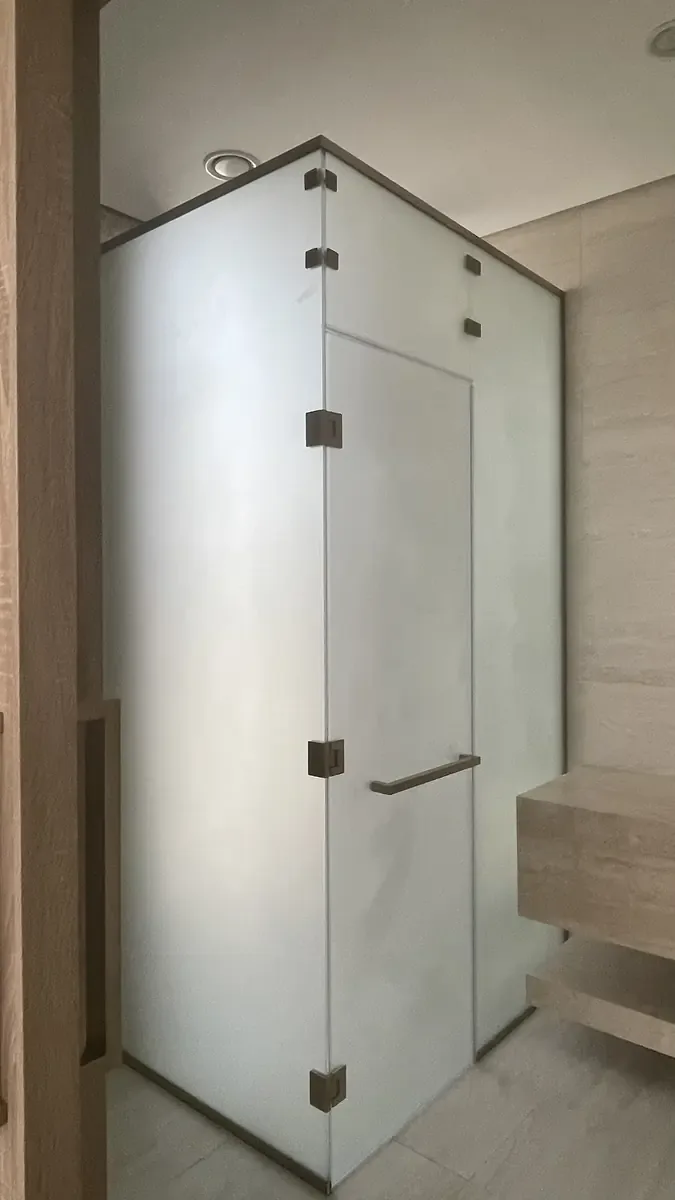
The trade-off is privacy. If the bathroom is shared and privacy matters more than openness, frosted or textured glass may be more suitable.
3. Low-iron glass: when you want greater clarity
Standard clear glass can show a slight green tint, especially along thicker exposed edges. Low-iron glass reduces that tint and gives the glass a more neutral, clearer appearance.
This difference is mainly aesthetic. It can be more noticeable in bright bathrooms, on thicker panels and in designs where exposed glass edges are part of the look.
Good use case: low-iron glass is worth considering when the bathroom uses white stone, pale tile or very neutral finishes and you want the glass itself to look as colourless as possible.
4. Frosted glass: better when privacy matters
Frosted glass diffuses the view through the enclosure while still allowing light to pass. It is useful when the shower should feel more private without becoming visually heavy like a solid wall.
The entire panel can be frosted or, depending on the design, a partial privacy treatment can be considered. The final appearance should be chosen with the bathroom lighting and surrounding finishes in mind.
5. Fluted glass: texture without making the shower fully opaque
Fluted glass uses a textured surface that distorts the view and adds a strong decorative character. It can work especially well in bathrooms with bronze, black or other statement hardware.
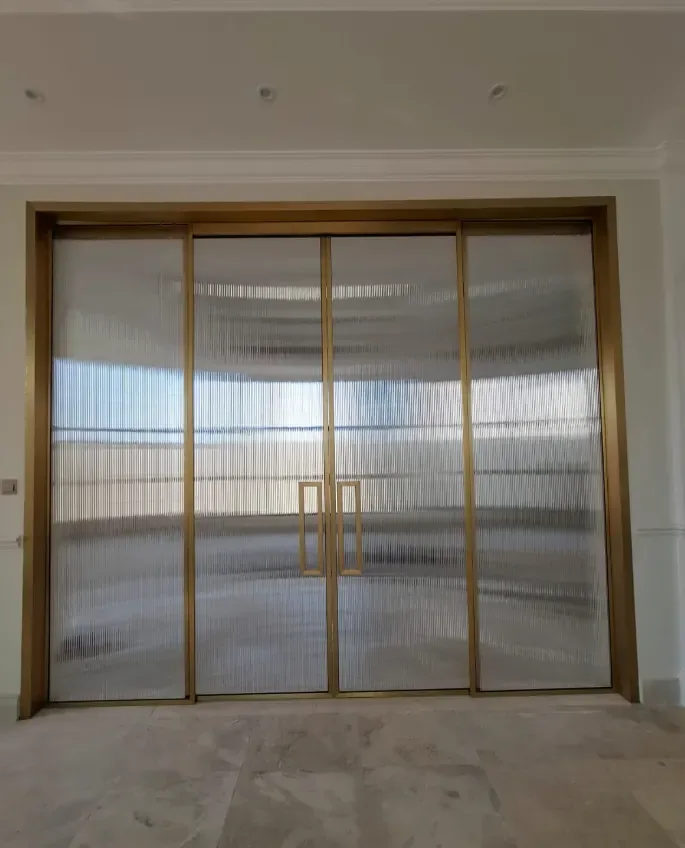
Because the texture becomes part of the design, the glass should be chosen together with the frame or hardware finish rather than as an isolated material sample.
6. Tinted glass: a darker, more decorative choice
Tinted shower glass can introduce grey, bronze or another toned appearance depending on the selected glass. It works best when the darker glass is intentional and coordinated with the bathroom palette.
Compared with clear glass, tinted glass reduces visual transparency and can make the enclosure feel more prominent. In a small bathroom, that may be exactly the effect you want, or the exact opposite. Interiors remain annoyingly context-dependent.
7. What thickness should shower glass be?
Blue Lake shower projects can include 8 mm, 10 mm and 12 mm glass, plus laminated configurations where required. Thicker glass is not automatically the correct choice for every enclosure.
The final thickness depends on the panel size, whether it is fixed or moving, the opening method, support points and the selected hardware. A fixed panel, a large hinged door and a sliding enclosure may not all use the same specification.
8. Why tempered glass is important for shower enclosures
Shower enclosures use safety-glass configurations rather than ordinary annealed window glass. Tempered glass is heat-treated for increased strength and, if it fails, breaks into small granules rather than large sharp shards.
Any required holes, notches or cut-outs for hinges, handles and fittings should be planned before tempering because the finished panel cannot simply be cut casually on site afterward.
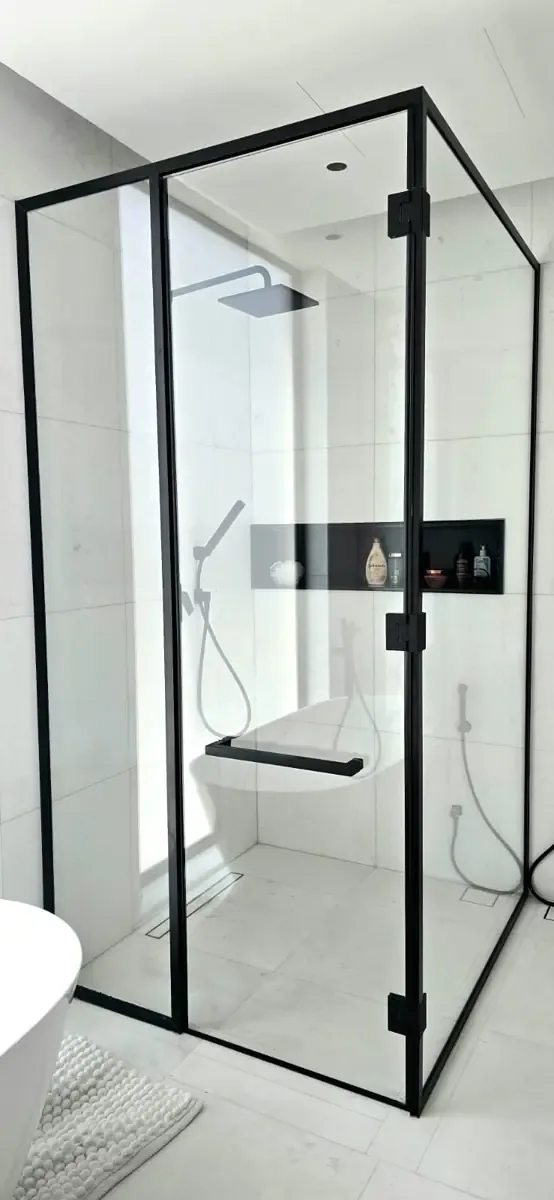
9. Match the glass to the enclosure layout
The best glass finish can still be the wrong choice if it does not suit the bathroom layout. Clear or low-iron glass can make a small walk-in shower feel more open, while frosted or fluted glass may be better when privacy is the main concern.
For hinged doors, the panel size and hinge layout matter. For sliding systems, track and overlap matter. For fixed panels, width and splash control matter. The glass finish is one layer of the decision, not the whole thing.
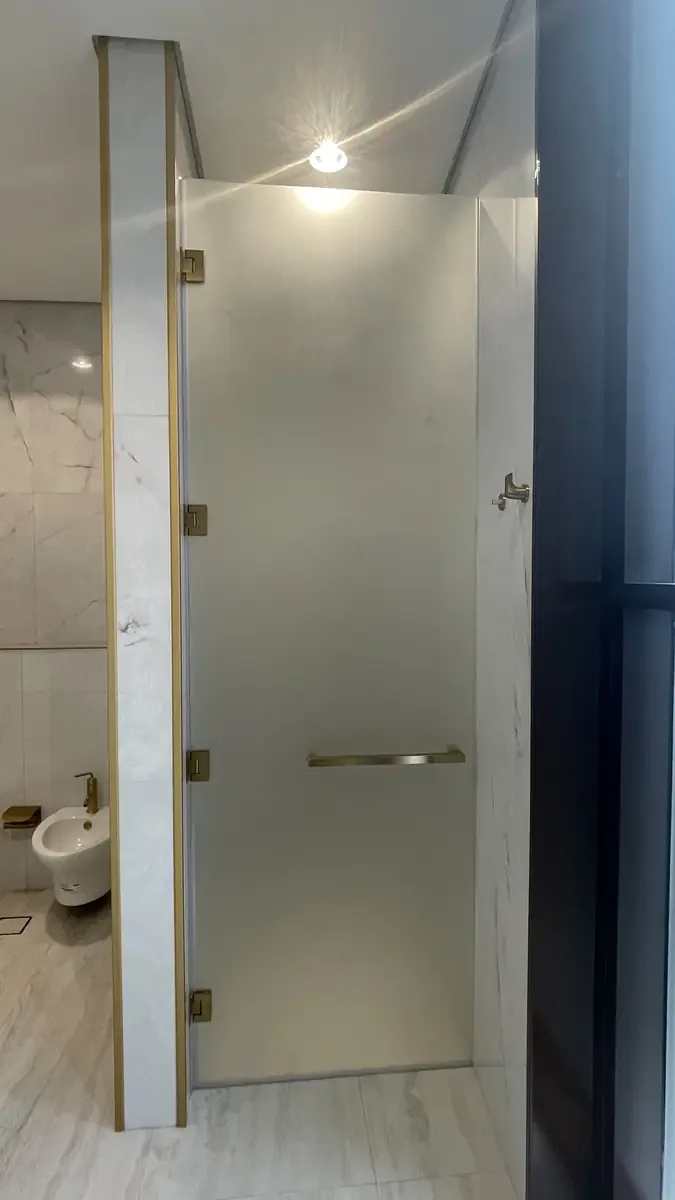
10. Which glass is easiest to keep looking clean?
All shower glass needs regular cleaning because water spots, soap residue and mineral deposits can build up on the surface. Clear and low-iron glass show spotting more visibly because the whole point is visual clarity. Frosted and textured glass may hide some marks but can also have more surface detail to clean around.
An optional protective coating can be discussed for some shower projects, but it should be treated as a maintenance aid rather than a magical anti-cleaning force field. Routine care is still required.
11. How to choose the right glass for your bathroom
- Decide how much privacy you want.
- Choose whether the bathroom should feel open, decorative or more enclosed.
- Confirm the enclosure layout: fixed, hinged, sliding, framed or frameless.
- Choose clear, low-iron, frosted, fluted or tinted glass.
- Confirm glass thickness and hardware after measurement.
- Coordinate the glass with frame, hinge, handle and other bathroom finishes.
Not sure which shower glass to choose?
See Blue Lake's shower-glass options or send bathroom photos and approximate dimensions to compare clear, low-iron, frosted, fluted and tinted glass.