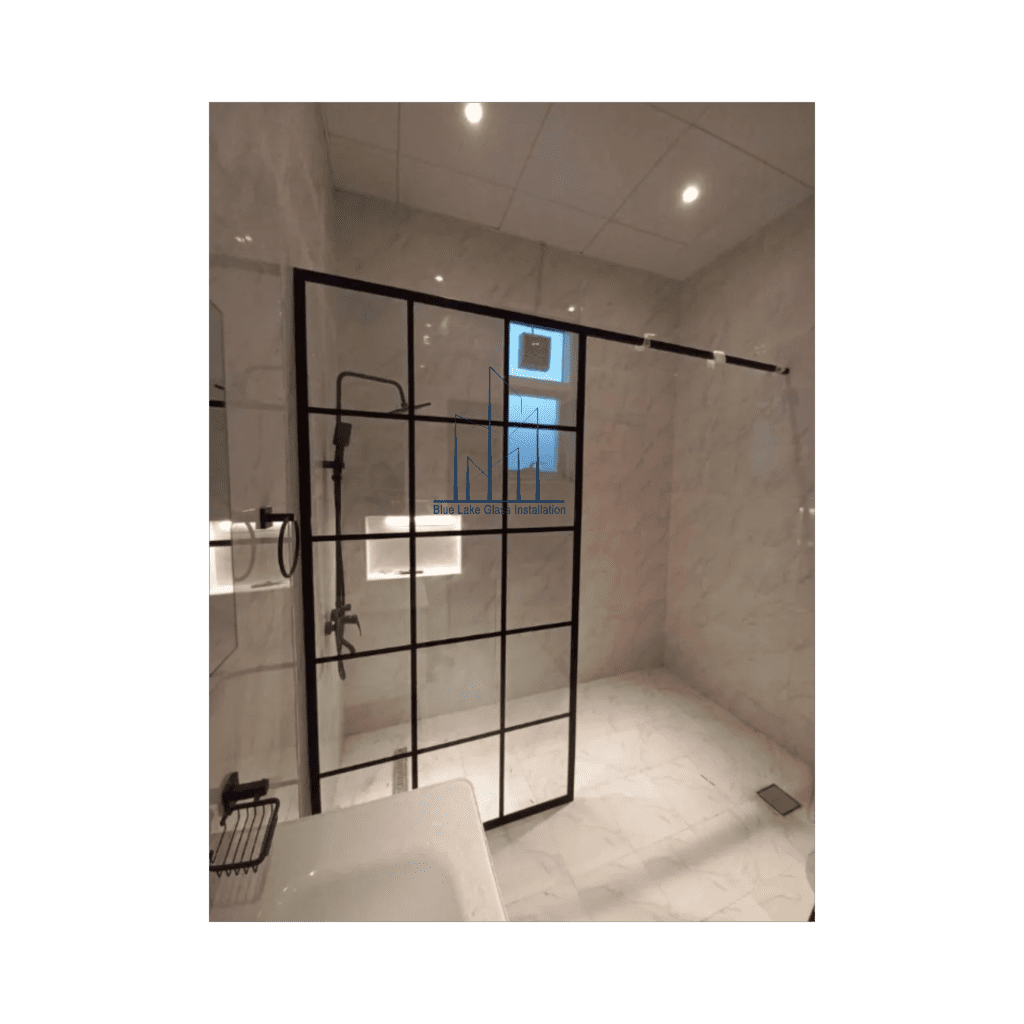
Frameless vs Framed Shower Glass in Dubai: Which Is Better?
Compare frameless and framed shower enclosures by appearance, hardware, cleaning, opening style, glass options and bathroom layout before choosing your final design.
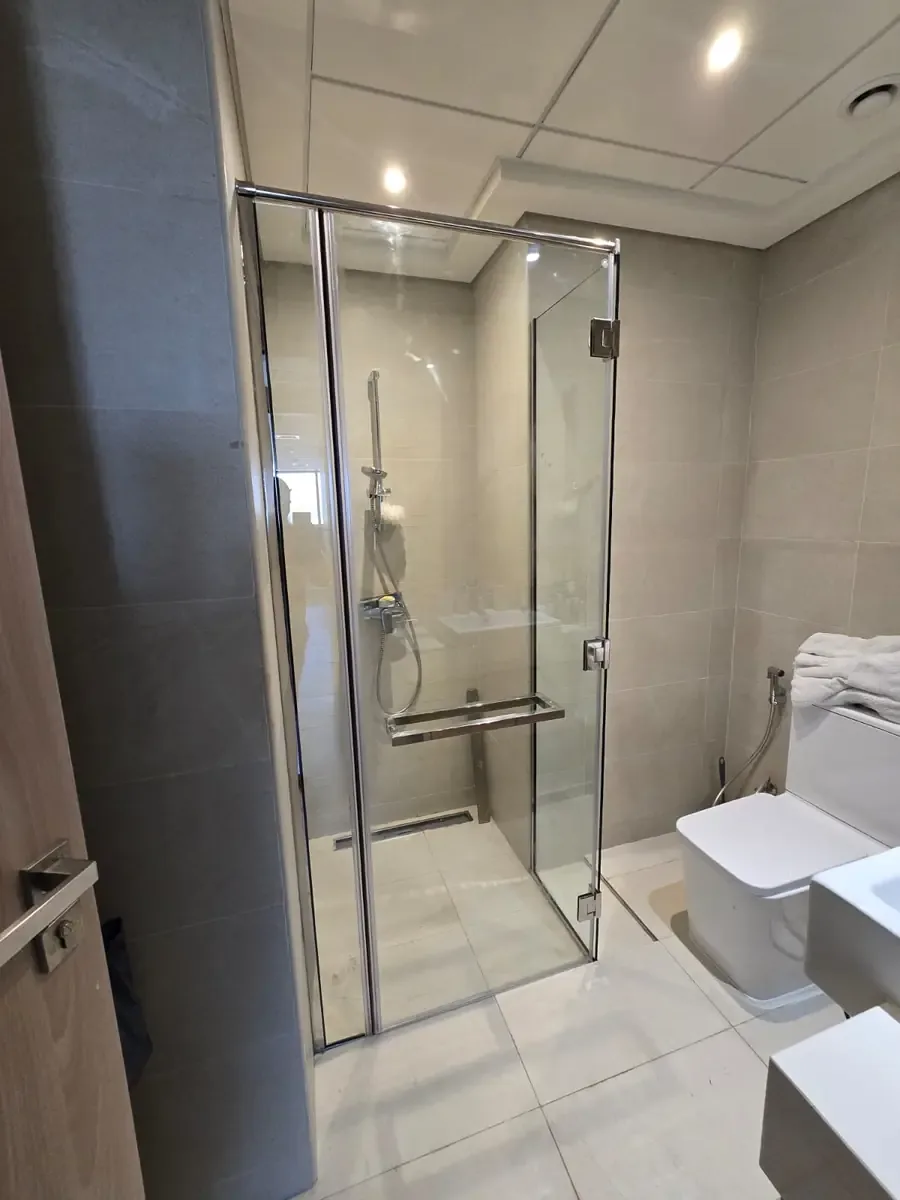
Choose frameless shower glass when you want minimal visible profiles and a lighter, more open appearance. Choose framed shower glass when you prefer a stronger outline around the enclosure or want the frame finish to become part of the bathroom design. The opening style, bathroom clearance and final measurements still matter in either case.
“Frameless” and “framed” describe how much visible framing surrounds the shower glass. They do not automatically tell you whether the door slides or swings. That distinction matters because homeowners often compare the wrong things and end up turning a simple bathroom decision into a small engineering summit.
Blue Lake supplies and installs custom shower glass in Dubai, including frameless, framed, sliding, hinged, fixed-panel and bathtub-screen layouts. For a broader overview, see our shower glass Dubai guide.
1. Frameless vs framed shower glass at a glance
| Feature | Frameless shower glass | Framed shower glass |
|---|---|---|
| Visual style | Minimal visible framing | More defined profiles around the enclosure |
| Bathroom feel | Open and visually light | More structured and outlined |
| Hardware visibility | Hinges, brackets, channels or other fittings are more isolated | Frame profiles become part of the overall design |
| Finish emphasis | Glass and tile remain visually dominant | Black, bronze or other frame finishes can become a design feature |
| Opening options | Can be combined with suitable hinged, fixed or sliding layouts | Can also use different door and panel arrangements |
2. Why choose frameless shower glass?
Frameless shower glass reduces the amount of visible metal around the enclosure. That allows tile, stone, fittings and the bathroom layout to remain more visible and can make a compact bathroom feel less visually divided.
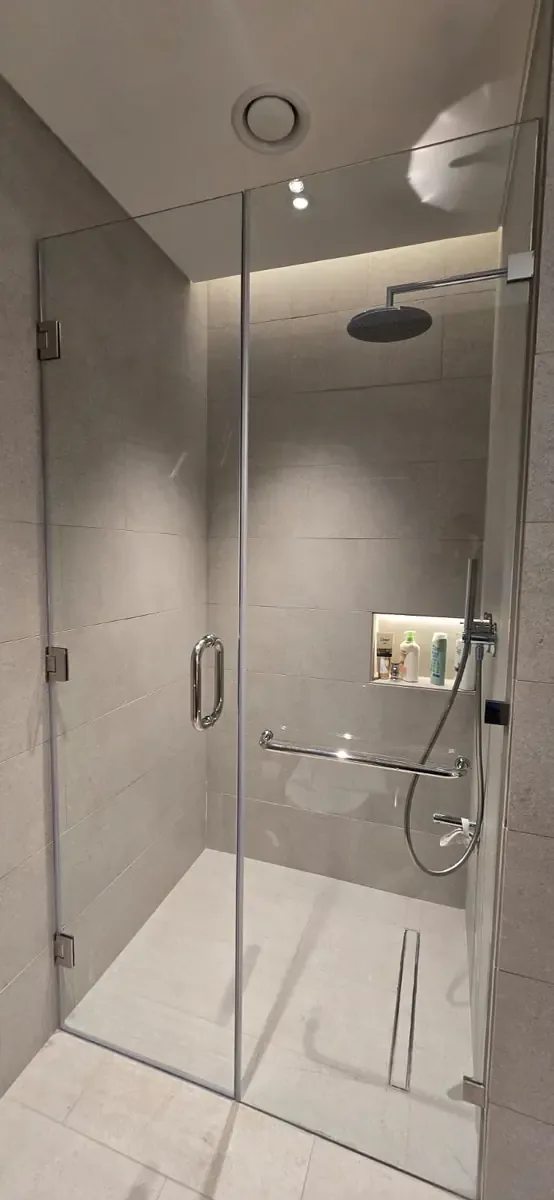
It can work well with clear or low-iron glass where transparency is part of the design. Frosted, tinted and other decorative glass options can also be considered depending on the required privacy and overall style.
Design point: frameless does not mean hardware-free. The glass still relies on hinges, brackets, channels or other suitable supports depending on the enclosure layout.
3. Why choose framed shower glass?
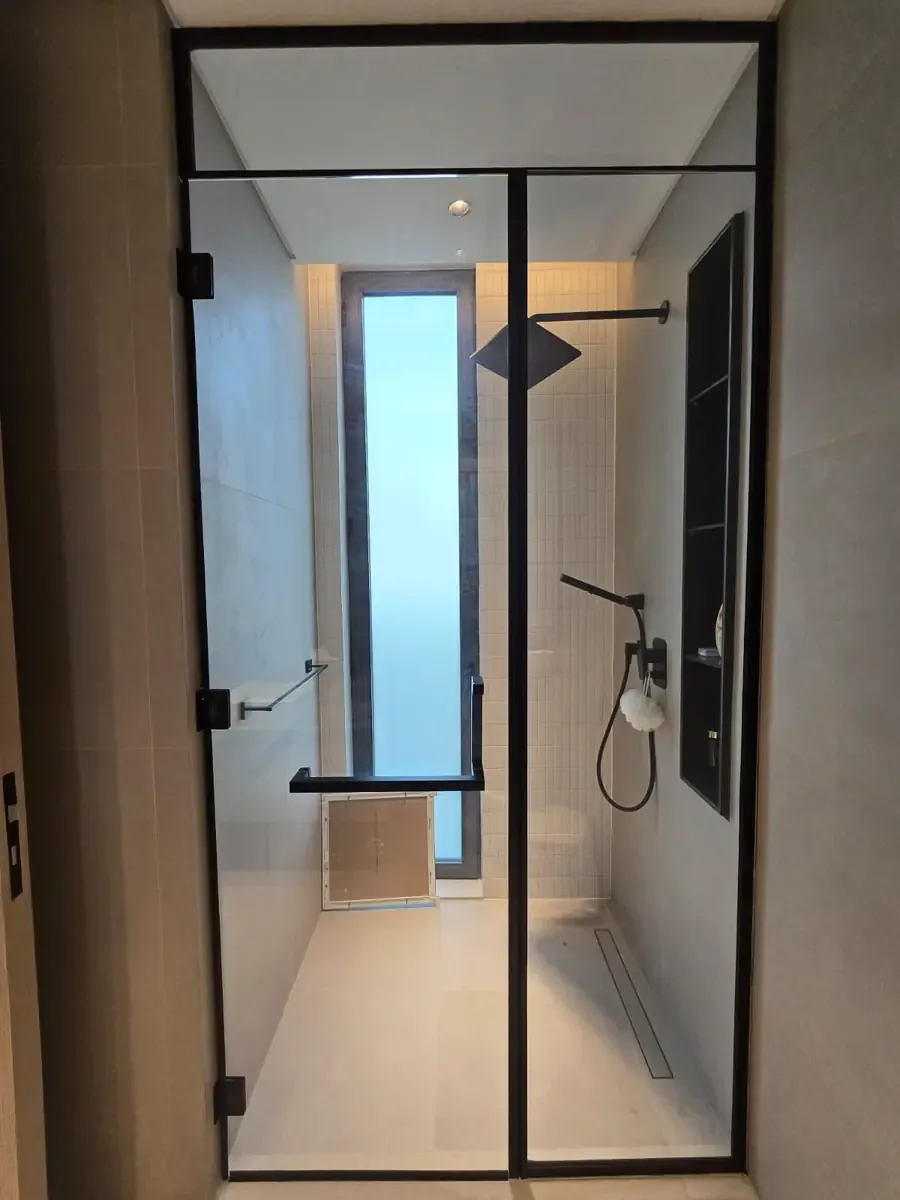
Framed shower enclosures use visible profiles around more of the glass. Instead of trying to make the metal disappear, the frame becomes an intentional visual element.
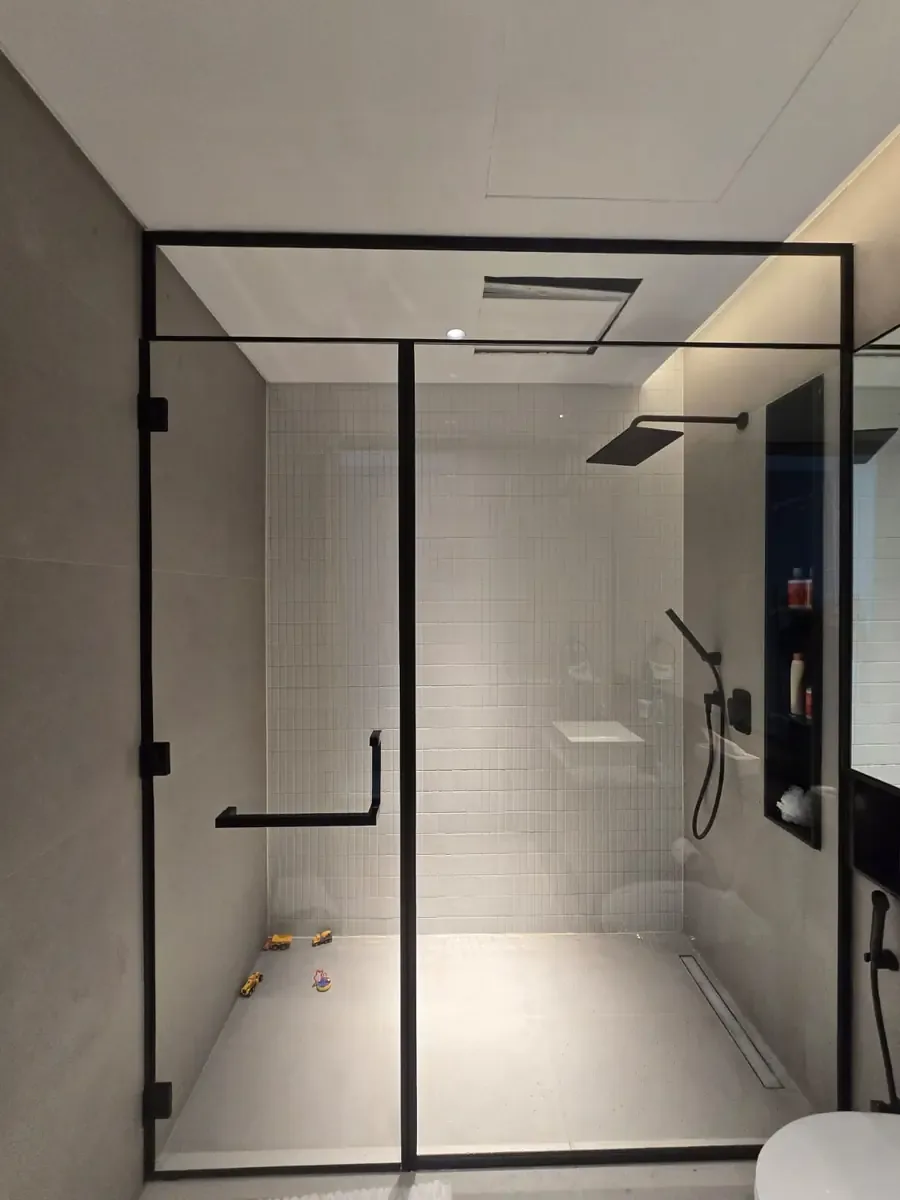
This can work especially well in bathrooms where black, bronze or another hardware finish is repeated across taps, handles, accessories or other metal details.
4. Does one option save more space?
Frameless versus framed is not the main factor that determines floor-space use. The opening mechanism matters more. A hinged door needs room to swing, while a sliding system moves along the opening and can be useful when clearance is limited.
So a small bathroom does not automatically require a framed or frameless enclosure. First decide how the entrance should work, then choose the amount of framing and the visual style.
5. Can frameless and framed systems both slide?
Sliding is an opening method, not a frame category. Depending on the selected system, sliding shower doors can use more visible profiles or a more minimal appearance.
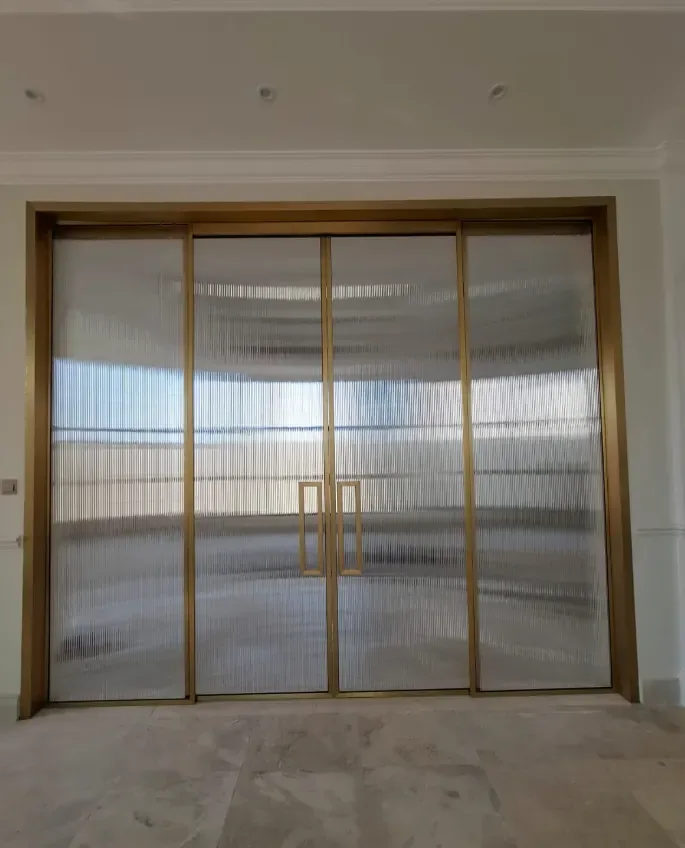
This is useful when you like the cleaner look of minimal glass but your bathroom does not have enough swing space for a conventional hinged door.
6. What about cleaning and maintenance?
Any shower enclosure needs routine cleaning because water, soap and mineral deposits collect on glass and hardware. Frameless systems have fewer continuous profiles, while framed systems have more visible channels and edges to wipe around.
The difference should not be exaggerated into a promise that one type somehow cleans itself. It does not. Humanity has not yet escaped bathroom maintenance.
7. Does glass thickness change between systems?
Blue Lake shower projects can include 8 mm, 10 mm and 12 mm glass options. The final thickness depends on panel dimensions, support, opening method and selected hardware rather than the label “framed” or “frameless” by itself.
Panel size, hinge positions, channels, brackets and sliding hardware all influence the final configuration. Glass holes and cut-outs also need to be planned before tempering and fabrication.
8. Which one suits black hardware better?
Both can work with black hardware, but they create different effects. On a frameless enclosure, black hinges, brackets or channels appear as smaller accents against the glass. On a framed enclosure, the black outline becomes much more visible and graphic.
If the bathroom already has black taps, shower fittings or accessories, either approach can coordinate well. The decision is mainly whether you want the metal to stay subtle or become part of the visual composition.
9. Final measurement matters for both
Custom shower glass should be based on the finished bathroom opening. Tile, stone, thresholds and surrounding walls can affect the dimensions and the position of hinges, channels or sliding hardware.
- Choose the overall enclosure style: framed or frameless.
- Confirm whether the entrance is hinged, sliding, fixed/open or another arrangement.
- Measure the finished opening and nearby fixtures.
- Select glass style, thickness and hardware finish.
- Confirm panel support, door movement and fixing locations.
- Fabricate and install to the approved measurements.
10. Common mistakes to avoid
- Thinking frameless means hinged. Frame style and opening style are separate decisions.
- Choosing by appearance before checking bathroom clearance. The door still needs to operate comfortably.
- Assuming framed always means bulky. Profile proportions and finish can vary by system.
- Choosing glass thickness without considering hardware. The enclosure works as a complete system.
- Measuring before tile and finished surfaces are ready. Final dimensions are what matter.
- Ignoring hardware finish. Especially on framed systems, it strongly affects the final appearance.
Choosing between framed and frameless shower glass?
See Blue Lake's shower-glass options or send bathroom photos and approximate dimensions to discuss the enclosure style, opening method, glass and hardware.