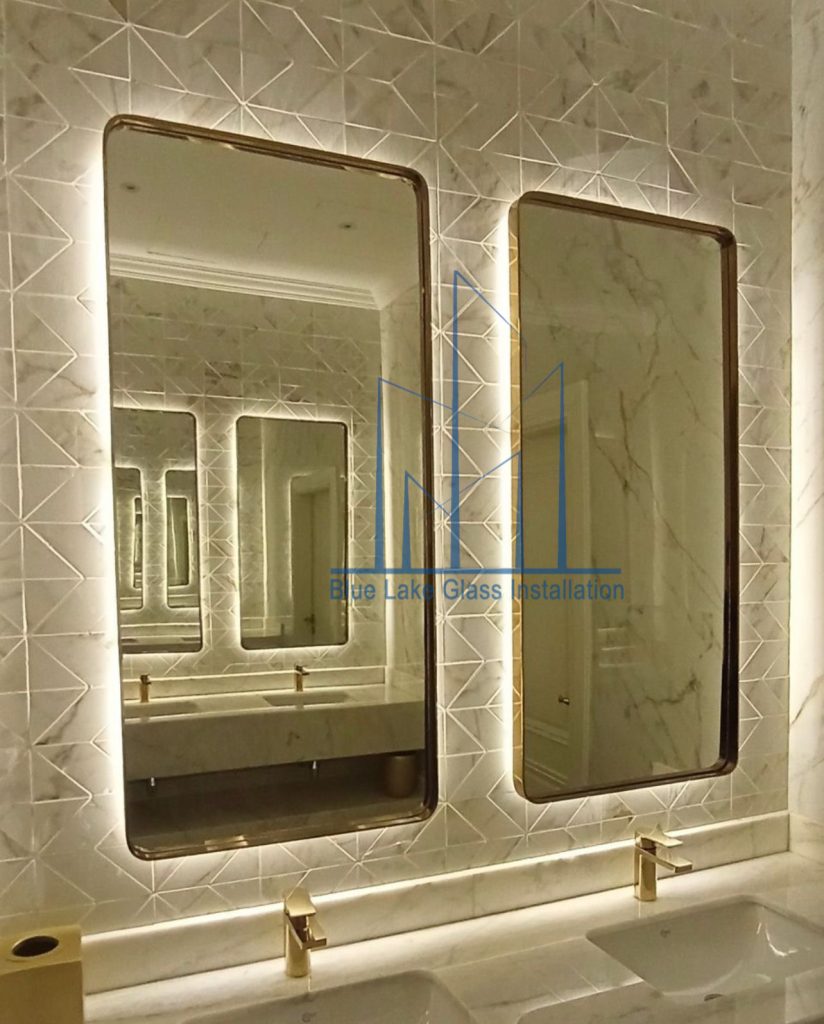
LED Mirrors in Dubai: Sizes, Shapes & Installation Guide
A practical guide to choosing an LED mirror for bathrooms, vanities and dressing areas, including size, shape, lighting, electrical planning and installation details.
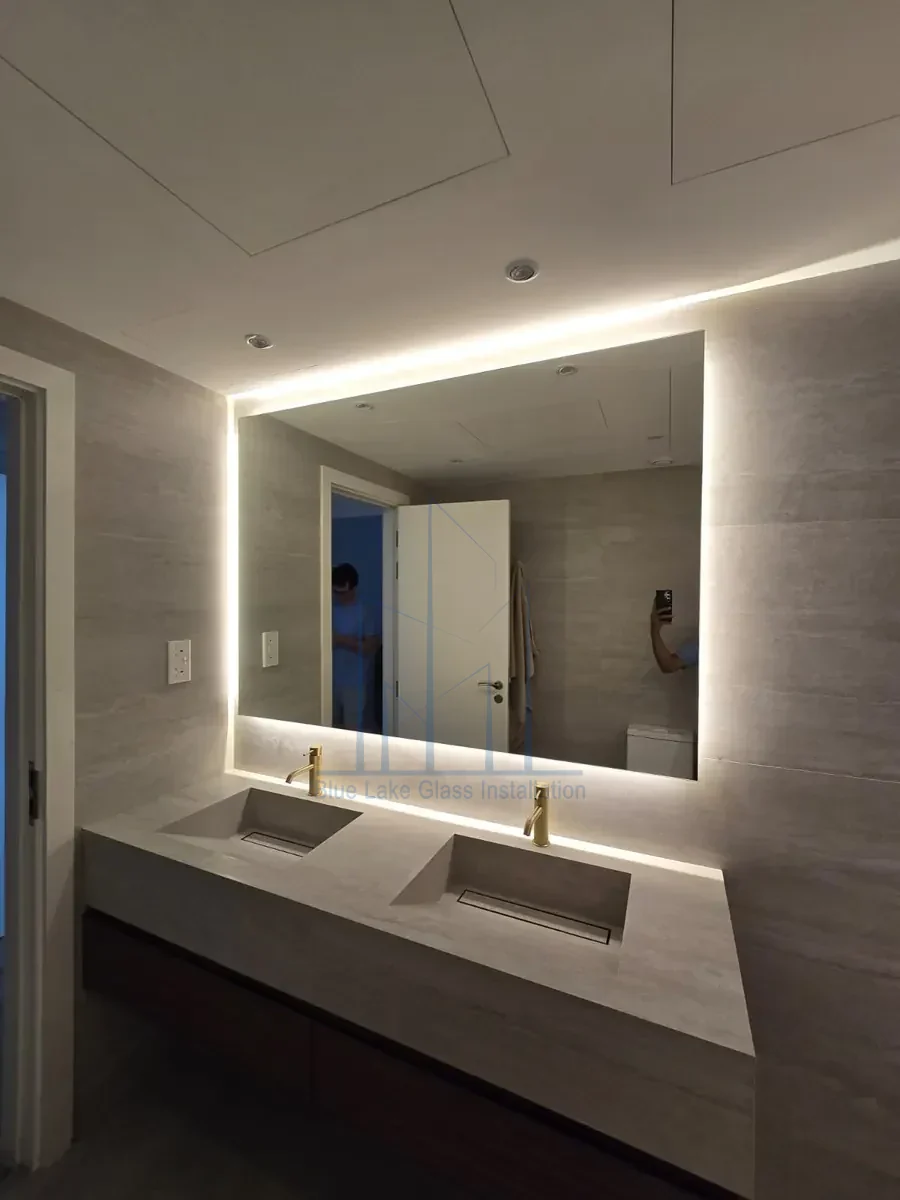
Choose an LED mirror around the finished wall, vanity and electrical position. Confirm the mirror width and height, shape, lighting effect and connection point before fabrication. A custom mirror is especially useful when the bathroom layout does not suit standard retail sizes.
LED mirrors combine a mirror and integrated lighting into one design element. They are commonly used above bathroom vanities, in dressing areas and in interiors where a cleaner look is preferred over separate wall lights.
Blue Lake supplies and installs custom and LED mirrors in Dubai. The mirror can be made around the actual wall dimensions, shape and installation conditions instead of forcing a standard size into the space.
1. Start with the right LED mirror size
The mirror should feel connected to the vanity and wall rather than floating awkwardly between them. Start by measuring the finished wall width, the vanity or basin width and the available height between the countertop and any ceiling, cabinet or lighting detail above.
A custom mirror gives you more control over proportion. It can align with a vanity, sit between tiled borders or fill a specific wall area without leaving random gaps that look suspiciously like somebody measured after ordering.
| What to measure | Why it matters | What to check |
|---|---|---|
| Wall width | Sets the maximum practical mirror width | Tiles, side walls, cabinets and trims |
| Vanity width | Helps determine visual proportion | Basin centre line and taps |
| Available height | Controls mirror height and mounting position | Ceiling, shelves and wall fittings |
| Electrical point | Affects the LED connection location | Final mirror position and cable route |
2. Rectangle, round or oval LED mirror?
Rectangular LED mirrors make efficient use of wall space and work naturally with wide vanities. Round mirrors create a softer focal point and can suit smaller vanities or bathrooms with many straight tile lines. Oval mirrors give a similar softer look while using more vertical height.
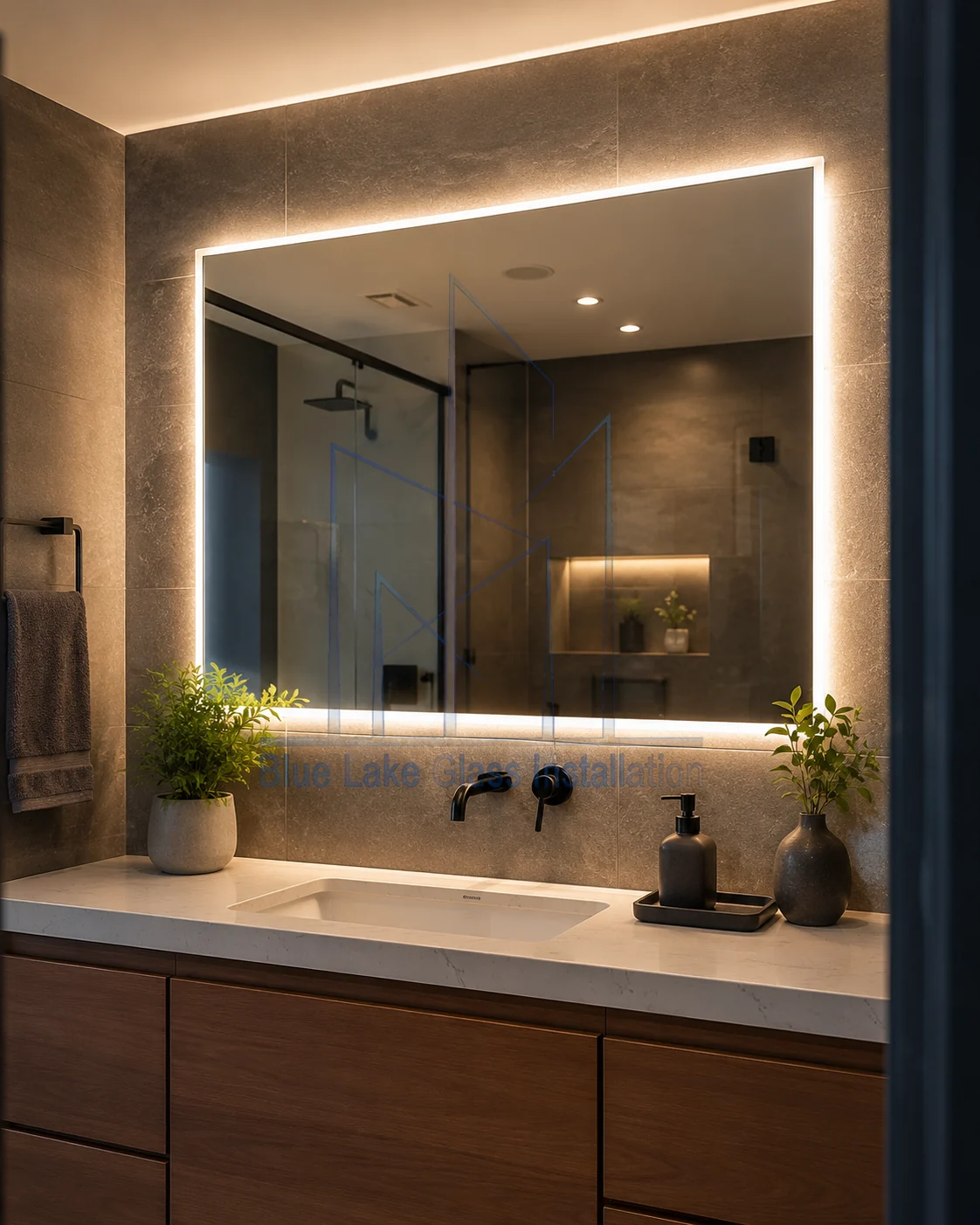
Custom shapes can also be considered, but the lighting arrangement and fabrication need to suit the shape. A decorative outline is useful only if the final mirror still works comfortably for everyday use.
3. Think about the lighting effect, not only the LED strip
Two LED mirrors can have similar dimensions and still look very different because of how the light is presented. Some designs create a brighter illuminated border, while others produce a softer glow around or behind the mirror.
The right choice depends on whether the mirror is mainly decorative, used for grooming or expected to contribute meaningful ambient light to the space. Bathroom ceiling lighting should still be considered as part of the room rather than assuming one mirror will heroically solve every lighting problem by itself.
Planning tip: decide the lighting effect before the electrical point is finalized. The mirror position, cable route and connection should all agree with each other.
4. Plan the electrical point before installation
An LED mirror needs power, which means electrical planning becomes part of the mirror installation. The connection point should be coordinated with the exact mirror location and the selected product or custom design.
If the wall is still under construction or renovation, confirm the mirror dimensions before the final electrical point is positioned. If the bathroom is already finished, the existing electrical location becomes one of the constraints that should be checked during planning.
5. Bathroom layout changes the mirror design
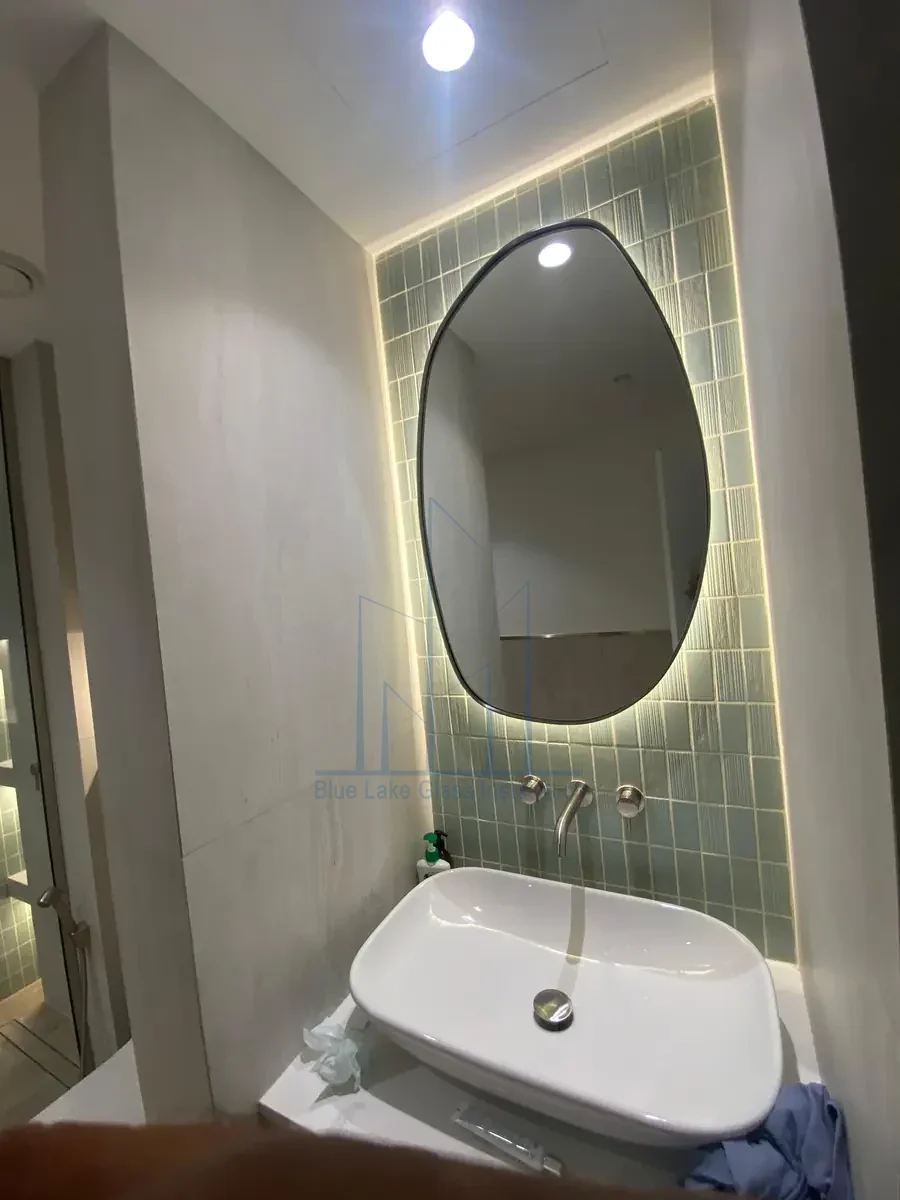
Bathroom mirrors often need to work around taps, basins, cabinets, sockets, switches, shelves and tile joints. The most balanced design usually starts from the basin or vanity centre line and then checks how much clear wall is available around it.
Where a custom cut-out or special shape is required, those dimensions need to be confirmed before fabrication. This is why final wall measurements are more useful than an approximate size taken before tile and joinery are complete.
6. When is a custom LED mirror better than a standard size?
A standard mirror can be perfectly suitable when the wall and vanity happen to match common dimensions. Custom fabrication becomes more useful when the mirror needs to align precisely with a vanity, fit between walls or cabinets, follow a particular shape, or coordinate with a specific interior concept.
Custom sizing also helps when two basins need one continuous mirror or when a narrow powder room needs a mirror proportion that is difficult to find ready-made.
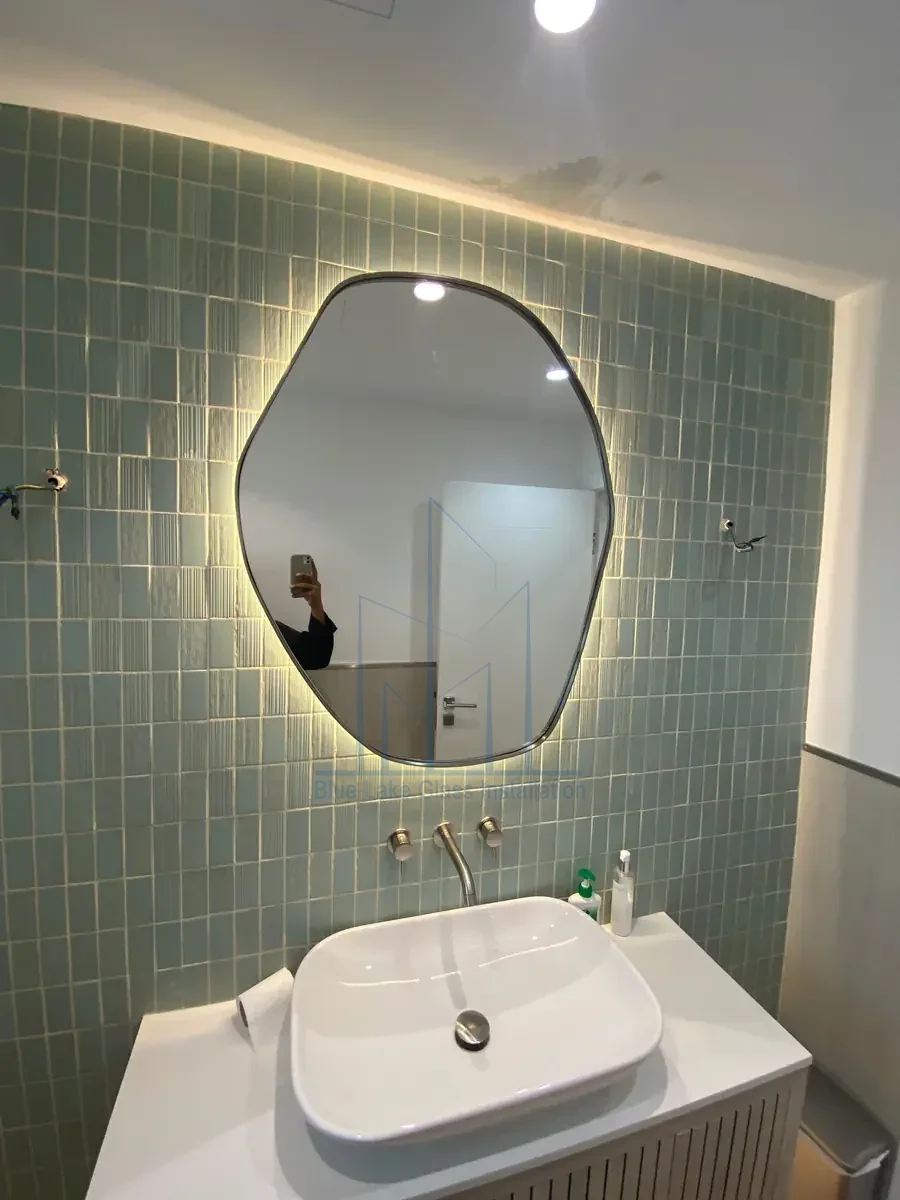
7. What should be checked before installation?
The wall should be ready to receive the mirror and the final position should be agreed before installation starts. Large mirrors need more careful handling and may require more than one installer depending on the dimensions and access.
For an LED mirror, the fitting process also needs to account for the electrical connection and any space required behind the mirror or mounting system. The exact installation method depends on the mirror design, size and wall condition.
- Confirm the finished wall and vanity dimensions.
- Choose the mirror size and shape.
- Decide the LED lighting style and visual effect.
- Coordinate the electrical connection point.
- Confirm the mounting method and wall condition.
- Fabricate and install to the approved layout.
8. LED mirrors are not only for bathrooms
Integrated mirror lighting can also work in dressing rooms, bedrooms, salons and other interiors. In those spaces, the mirror may be used more as a decorative or grooming feature than as part of a wet-area vanity wall.
9. What affects LED mirror cost?
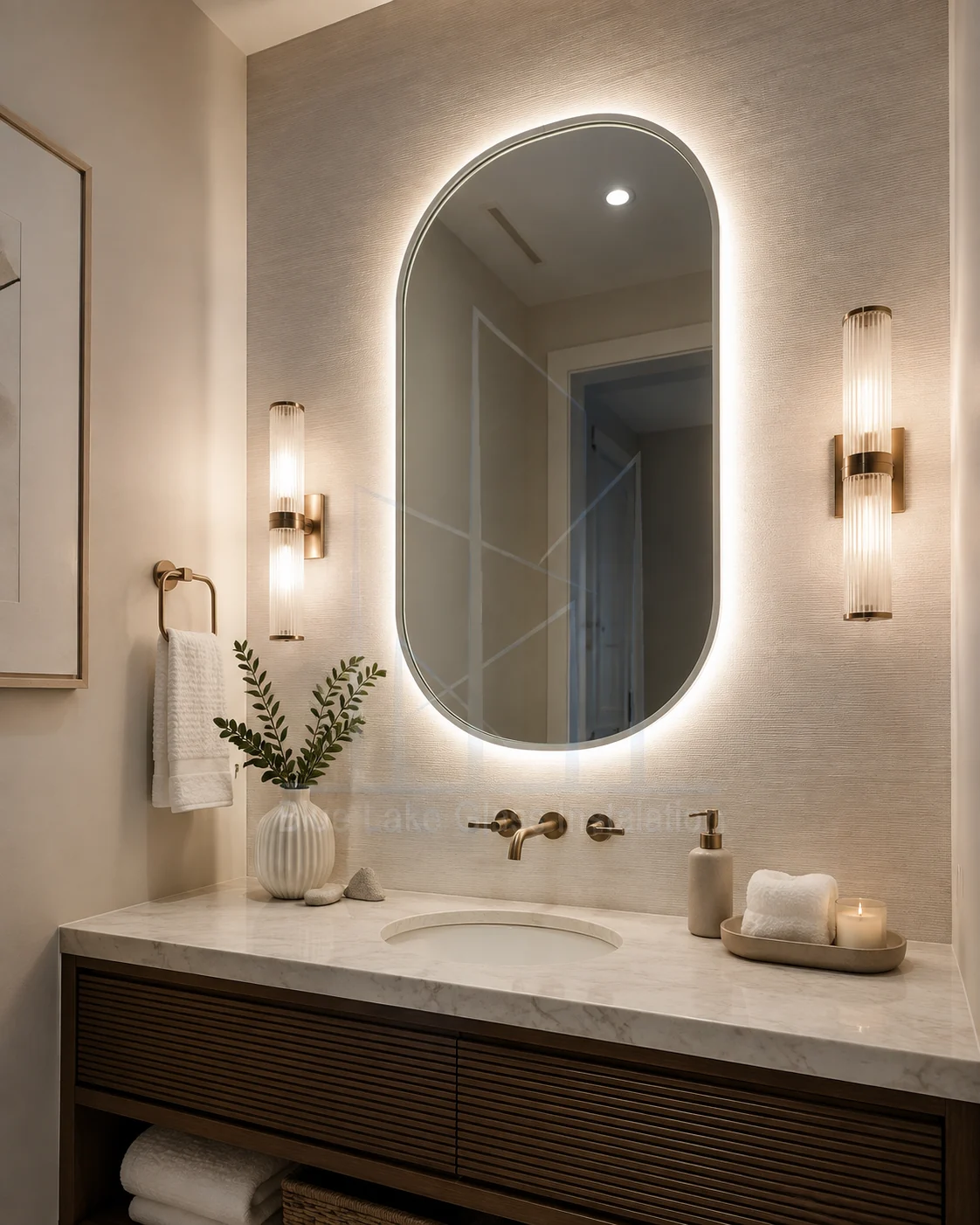
The final price depends on the mirror rather than one fixed “LED mirror rate.” A small standard rectangle and a large custom illuminated design require different amounts of mirror, lighting components, fabrication and installation work.
- Overall mirror size. Larger mirrors use more material and are heavier to handle.
- Shape. Round, oval and custom-cut designs can require more fabrication.
- Lighting configuration. The LED arrangement and electrical components affect the build.
- Edge and decorative details. Additional finishing can change fabrication time.
- Installation conditions. Wall condition, access, mounting height and electrical preparation can affect the work required.
10. Common LED mirror mistakes to avoid
- Buying before measuring the finished wall. Tile and cabinetry can change the usable space.
- Ignoring the electrical point. The mirror and power connection need to be planned together.
- Choosing size only from an online photo. The same mirror can look completely different above another vanity.
- Assuming bigger is always better. Proportion to the vanity and wall matters.
- Using the LED mirror as the only lighting plan. The rest of the room lighting still matters.
- Leaving mounting details until installation day. Wall condition and mirror size should be considered earlier.
Planning an LED mirror in Dubai?
See Blue Lake's custom mirror options or send a photo of the wall and approximate dimensions to discuss the size, shape, lighting and installation.