On this page
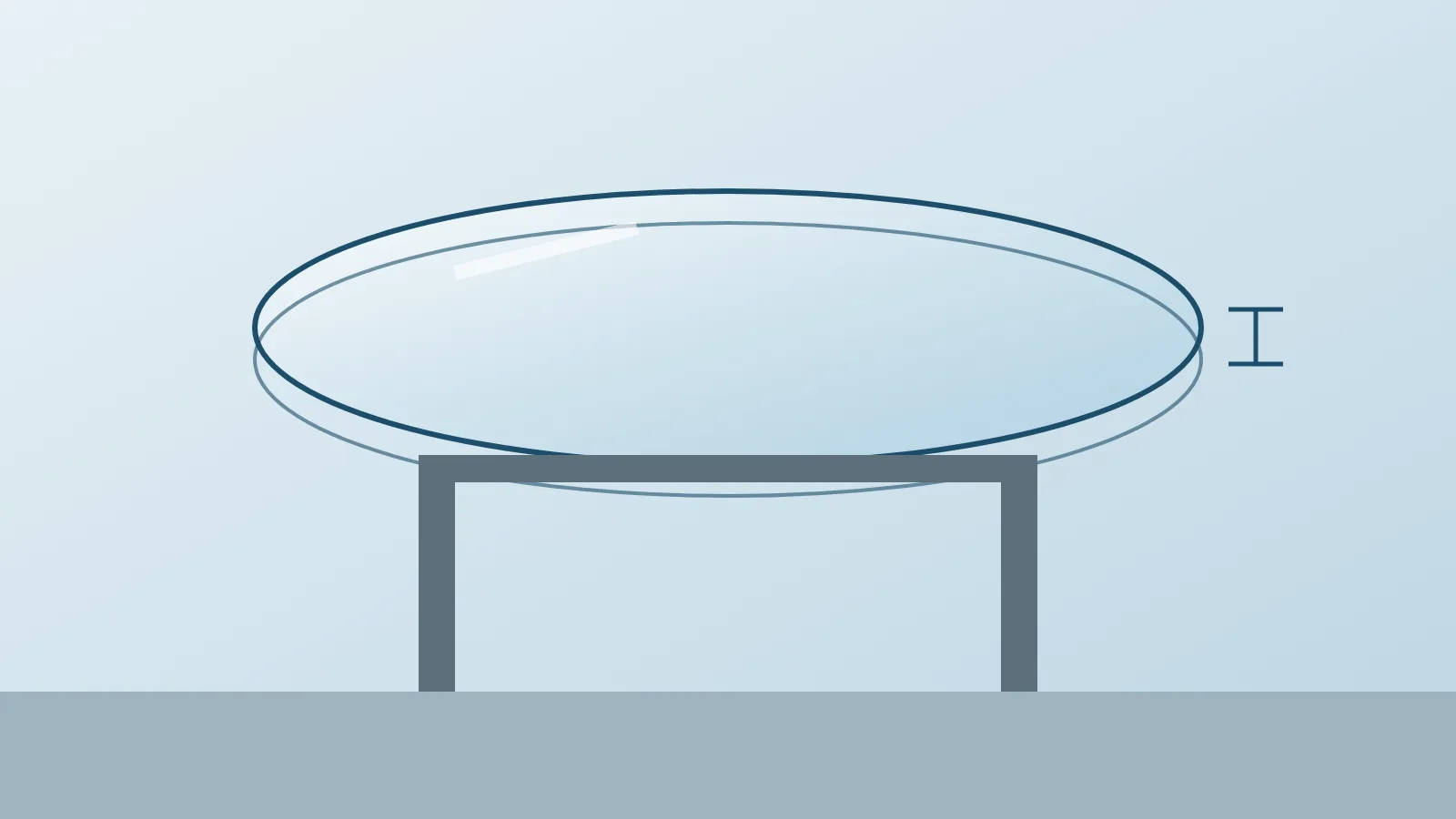
Glass table top thickness is the first decision to get right, because it affects strength, appearance and how the glass is supported. A thin top can suit a protective cover, while a dining table needs more.
Quick answer: as a starting guide, a protective top over a solid surface is around 4 to 6 mm, a coffee or side table around 8 to 10 mm, a dining or meeting table around 10 to 12 mm, and a glass surface supported mainly by a base 12 mm or more. The final thickness is confirmed after reviewing the furniture, span, support and size.
These ranges come from Blue Lake’s table top glass page and are starting points only. After reading this guide, see how to measure table top glass before you contact the team.
Starting ranges by table type
| Typical use | Starting range | Tempering |
|---|---|---|
| Protective top over solid furniture | 4 to 6 mm | Project dependent |
| Coffee or side table surface | 8 to 10 mm | Often recommended |
| Dining or meeting table surface | 10 to 12 mm | Commonly specified |
| Glass supported mainly by a base | 12 mm or more | Usually required |
What changes the choice
Thickness is never only about the table type. Four things move the number up or down.
Support
Glass resting on a solid surface is supported across most of its area. Glass spanning between legs or a base carries its own weight, so it needs to be thicker.
Size and span
A longer span and a larger overhang need more thickness. A small round table needs less than a long dining table.
Edge exposure
Exposed edges can be knocked, so the edge and thickness work together. Flat polished, rounded and decorative edges can be discussed according to the thickness and design.
Daily use
A dining table sees plates, elbows and chairs. A side table sees far less. Think about how the table will really be used.
Why tempering matters
Tempering makes glass stronger and, if it breaks, it breaks into small pieces. The page lists tempering as often recommended for coffee tables, commonly specified for dining tables and usually required for base-supported glass. Cut-outs, holes and edge details must be confirmed before tempering, because tempered glass cannot be cut or drilled afterward.
Shape and finish also matter
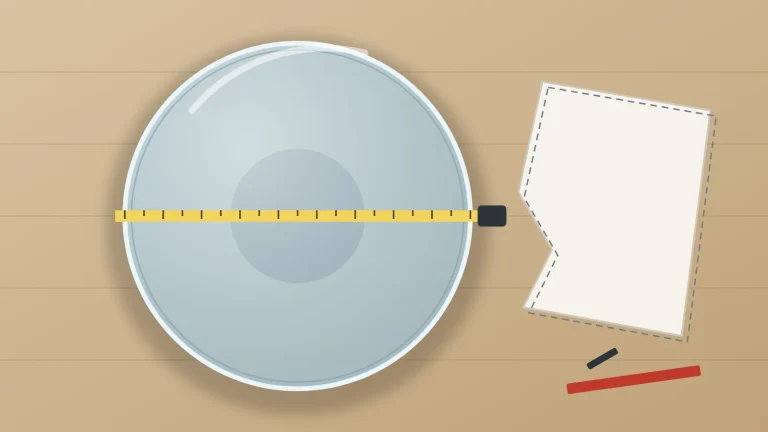
Table top glass can be rectangle, square, round, oval or an irregular shape. Clear, low-iron, tinted or frosted options may suit different interiors. Simple rectangles and circles can be prepared from confirmed dimensions. Irregular shapes and unusual corners may need a physical template before fabrication.
What to confirm before ordering
- Is the glass protecting a table top or forming the surface?
- What supports the glass, and how far does it span?
- The exact size and shape, with a template if needed.
- The edge finish and any cut-outs, such as umbrella holes or cable ports.
- The glass finish, such as clear, low-iron, tinted or frosted.
Replacement glass
If you are replacing a broken top, bring the old pieces or a template. Replacement glass can be prepared to match an existing furniture opening, subject to measurement and edge requirements.
Worked examples in plain words
Imagine a small round coffee table with a solid centre. The glass is supported near the middle, the span is short and the use is light, so a thickness in the coffee table range is a sensible starting point. Now imagine a long dining table where the glass sits on two legs. The span is long and the glass carries plates and elbows, so the thickness moves into the dining table range.
A third case is a side table where the glass only protects a wooden top. Because the wood carries the load, a thinner protective glass can be enough. In every case the supplier checks the base, the span and the use before confirming the number.
Handling and safety
Thicker glass is heavier. Plan how the glass will be carried and placed, and make sure the base can take the weight. Check that the table surface is level, so the glass rests evenly. Rubber pads or supports are common ways to protect the edges and the base.
Edge and finish choices
The thickness of the glass is visible along the edge, so the edge finish becomes part of the look. A flat polished edge looks clean and modern. A rounded edge feels softer to touch, which suits tables used by families. Decorative edges are possible depending on the thickness and design. Discuss the edge when you discuss thickness, because the two decisions affect each other.
Common questions people forget
Many people ask about thickness but forget to ask about the support under the glass. The base, the pads and the overhang matter as much as the glass. Others forget to mention that the table will be used outdoors, where weather and sun change what is suitable. Tell the team about the location and the daily use, and ask which details they will check before confirming the final thickness.
Next step
Send a photo of the table, approximate dimensions and a note on whether the glass protects a top or forms the surface. To get guidance, contact Blue Lake and share those details.
Frequently asked questions
A dining or meeting table surface typically starts at 10 to 12 mm. The final choice depends on the span, the base and the use, and it is confirmed after review.
Coffee and side table surfaces typically start at 8 to 10 mm. A thinner glass is more usual as a protective cover over a solid surface.
Tempering is often recommended for coffee tables, commonly specified for dining tables and usually required when a base mainly supports the glass.
No. Tempered glass cannot be cut or drilled afterward, so holes and cut-outs are confirmed before tempering.
Round, oval and irregular shapes can be prepared. Irregular shapes may need a physical template before fabrication.