On this page
Knowing how to measure table top glass saves a second trip, because most problems start with a measurement, not with the glass. A top that is a few millimetres too large will not sit, and one that is too small leaves a visible gap. Measure carefully, and know when to make a template instead.
Quick answer: simple rectangles and circles can be prepared from confirmed dimensions. Irregular shapes, unusual corners and existing furniture profiles may need a physical template before fabrication. Share a photo and your approximate dimensions first, and the team will tell you whether a template or a site measurement is needed.
This guide is for people in Dubai who want custom glass for a dining table, coffee table, desk or counter, or a replacement for a top that has cracked or been lost. The service is described on Blue Lake’s table top glass page, which covers custom sizes, shapes and edge finishes.
First decide what the glass is for
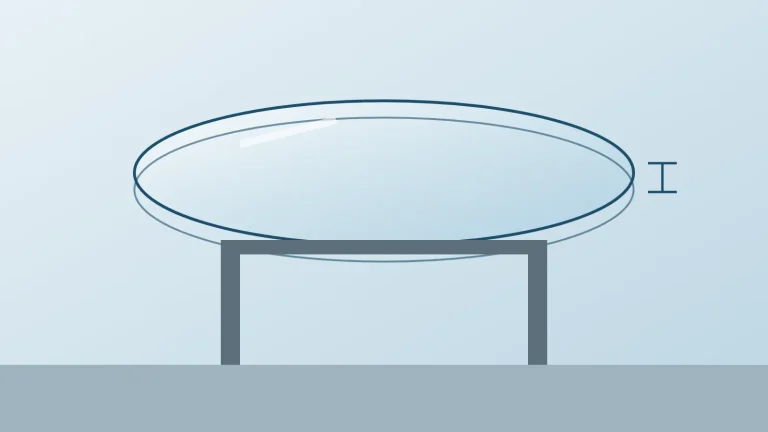
The way you measure depends on what the glass does. Blue Lake’s page describes two main uses. Table top glass can protect an existing furniture surface, or it can form the visible table surface itself. A protective top lies on a solid table, so the table edge is your guide. A surface top is held by a base or frame, so the way the base supports it matters as much as the size.
The page says the correct specification depends on how the glass is supported, the overall size and how the furniture will be used. Tell the team which case you have before you start measuring.
Measuring a rectangle or square
For a plain rectangular top, you need only a few numbers, but you should take them carefully.
- Measure the length along both long sides, not only one. Old tables are often not perfectly square.
- Measure the width at both ends and in the middle.
- Measure both diagonals. If they differ, the table is out of square, and you should say so.
- Note the corner style you want, sharp or rounded.
- Write every measurement down with the units, in millimetres or centimetres, and take a photo with the tape in view.
If the glass will sit inside a frame or a recess, measure the opening, not the outside of the table. If it will lie over a solid top, decide whether you want it flush with the edge or slightly inside it.
Measuring a round or oval top
Round tops look simple, but the diameter is easy to misread because the tape can slip off the centre.
- Round: measure across the widest point, then turn the tape a quarter turn and measure again. The two numbers should match.
- Oval: record the longest length and the widest width, and send a photo from straight above.
- With a base: measure the footprint of the base too, because it affects how the glass is supported.
The service page lists round, oval, rectangular and other made-to-measure shapes for smaller furniture such as coffee and side tables.
When a template is the better choice
Measuring works best for shapes a ruler can describe. The page says that irregular shapes, unusual corners and existing furniture profiles may need a physical template before fabrication. In its FAQ it adds that unusual outlines, handmade furniture or profiles that are difficult to measure accurately may use a physical template or a site measurement.
Cases where a template helps
- A hand-made or antique table with a wavy or uneven edge.
- A top with curved corners that are not simple quarter circles.
- A replacement piece that must match an existing furniture opening.
- A shape with a notch or cut-out for a post or a column.
How people usually make one
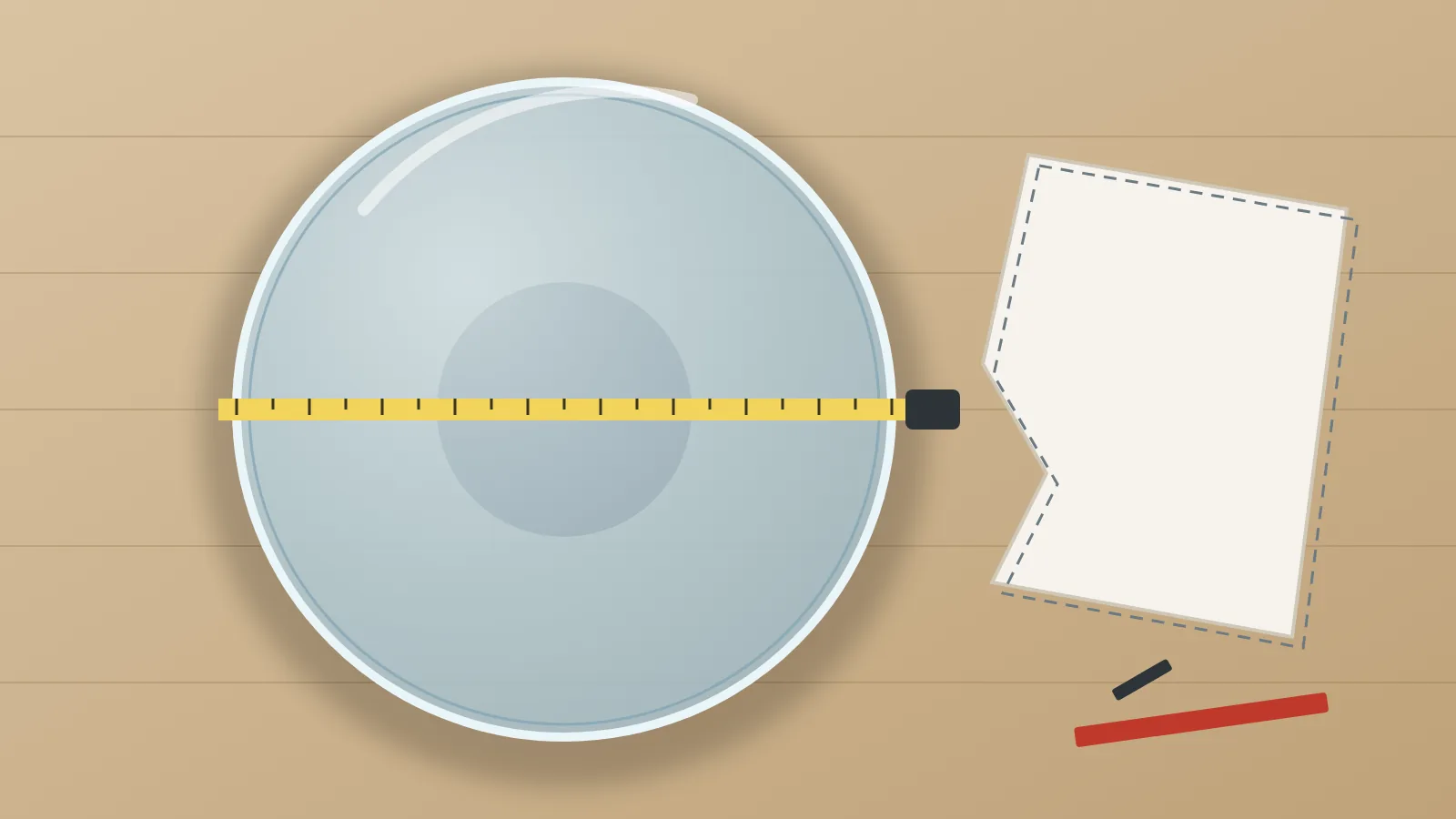
A template is a full-size copy of the shape, often cut from stiff paper or thin card. Lay the card on the table, trace the edge, trim it and check that it sits correctly. Mark the front side and any hole positions. Ask the team how they want it sent, because the final measurement is confirmed by Blue Lake. The illustration at the top shows the idea: a tape for simple shapes and a paper template for the odd ones.
Edges, corners and holes
Measuring is only part of the specification. The page lists several choices that are settled with the size:
- Shape: rectangle, square, round, oval or an irregular profile.
- Edge finish: flat polished, rounded and decorative edge options, discussed according to the glass thickness and design.
- Cut-outs and holes: cable ports, umbrella holes and similar openings.
- Appearance: clear, low-iron, tinted or frosted options may suit the furniture and the interior.
One point deserves emphasis. Holes, notches and cut-outs must be positioned before tempering, because tempered glass cannot be cut or drilled afterwards. Decide where a cable port or an umbrella hole goes before the glass is made, and mark it clearly on your photo or template.
Thickness and tempering are not guesses
Many customers ask for a thickness in the first message. The page says thickness depends on support, size and use, and that the final thickness and safety requirements are confirmed after the furniture, span, support and dimensions are reviewed. Tempered glass can be specified where the table design, span, exposed edges or intended use call for a safety glass solution.
For that reason, this guide does not give a number. The thickness table on the service page shows starting ranges for different uses, and the team confirms the final choice for your table.
Common measuring mistakes
- Measuring only one side of an old table and assuming it is square.
- Forgetting the overhang over the base, which changes how the glass is supported.
- Choosing a hole position after the glass has been made.
- Measuring a round top at a single point.
- Sending a photo taken at an angle, which hides the real shape.
What to send when you ask
- A photo from directly above and one from the side.
- The approximate dimensions, and which side you measured.
- Whether the glass protects an existing top or becomes the table surface.
- The edge, corner and glass appearance you prefer.
- The position of any holes, cut-outs or a column.
Blue Lake’s process is to share the table, confirm measurements (from dimensions, a template or a site measurement), confirm the specification before fabrication, and then deliver and position the finished glass according to the agreed scope.
To start, contact Blue Lake with photos and approximate dimensions.
Frequently asked questions
Yes. For unusual outlines, handmade furniture or profiles that are difficult to measure, a physical template or site measurement may be used before fabrication.
Simple rectangles and circles can be prepared from confirmed dimensions, so a template is usually not needed for a plain circle.
Yes, where the glass specification allows it. They must be positioned before tempering because tempered glass cannot be cut or drilled afterwards.
Yes. Corner shape and edge finish can be chosen according to the table design, glass thickness and intended use.
Yes. Replacement pieces can be prepared to match an existing furniture opening, subject to measurement and edge requirements.