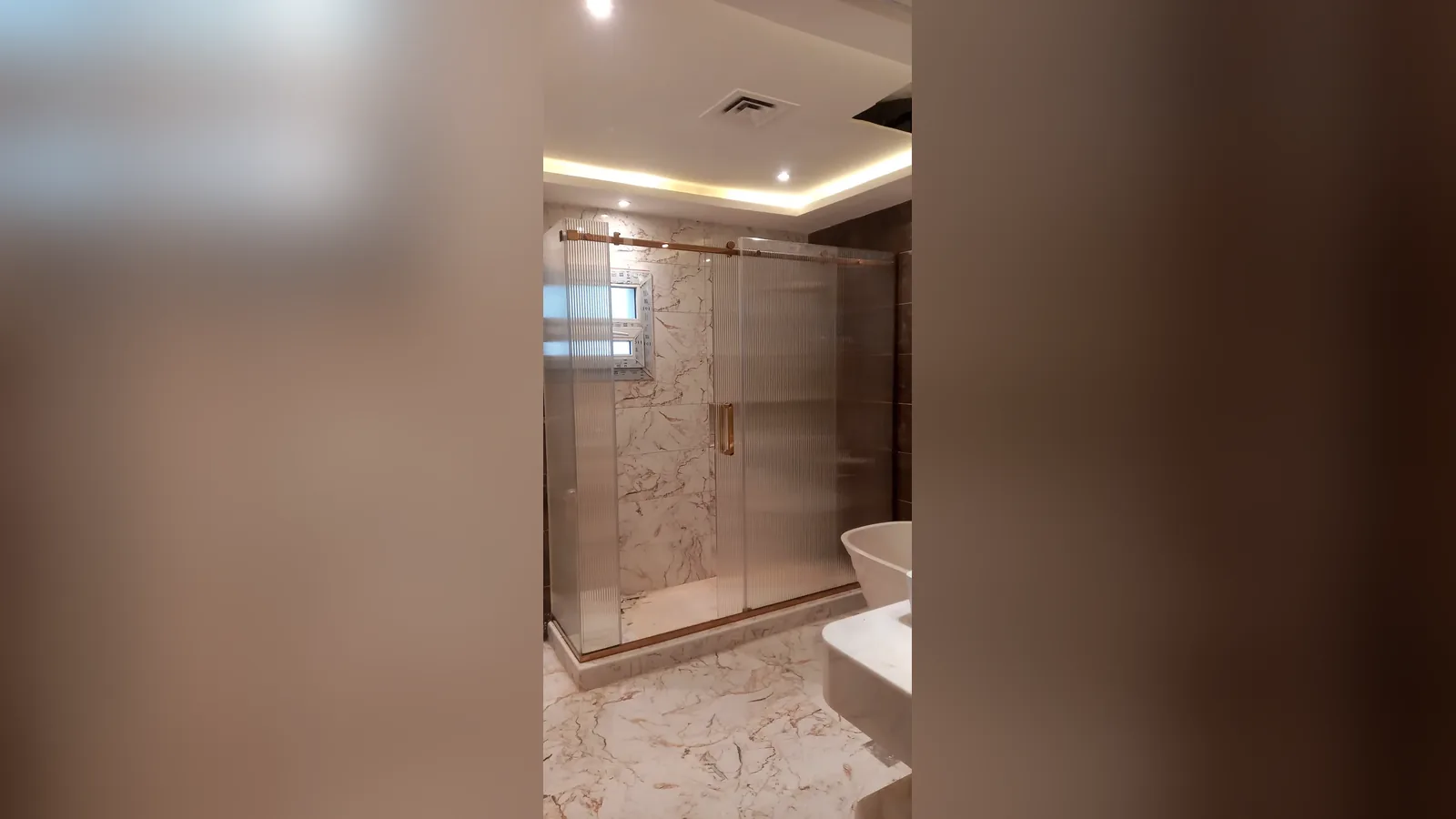
Sliding shower doors move along a track instead of swinging into the bathroom, which makes them a practical answer when there is no room for a hinged door. The trade-off is simple: you gain floor space, and in return the track and rollers need regular, light care.
Quick answer: choose a sliding door when a swinging door would hit the vanity, toilet or wall, or when the bathroom is narrow. Choose hinged or fixed glass when you want the widest opening or the least hardware to clean. Either way, the opening is measured on site before the glass is made.
How a sliding shower door works
A sliding system has one or more glass panels that run along a rail. The moving panel is carried by rollers or wheels, and stoppers or guides keep it aligned when it closes. Depending on the layout, a fixed panel stays in place while the door slides beside it.
Blue Lake’s custom shower glass service describes sliding systems as bypass and track-mounted layouts that save space in tighter bathrooms. Which layout fits depends on the opening, the wall and floor conditions and the look you want.
Why the clear opening is narrower than the opening
In a typical two-panel arrangement one panel always sits in front of the other. That means the clear walking width is smaller than the full width of the enclosure. Check this against how you actually step in, especially if you need to carry a stool or help a child or older relative.
When a sliding door makes sense
Sliding doors are most useful where swing space is limited. They can also suit rentals and family bathrooms where nobody wants a door opening into a shared passage.
- Narrow bathrooms: a swinging door needs clear floor in front of the enclosure; a sliding one does not.
- Vanity or toilet close to the door: a door leaf that would collide with fittings is a common reason to switch to sliding.
- Shared or busy bathrooms: a door that stays inside the line of the enclosure is harder to bump.
When another layout may be better
If you want the widest possible entrance, a fixed walk-in panel or a hinged door is usually easier. Our guide to walk-in shower glass explains how a fixed panel keeps the entrance open. If you prefer fewer moving parts to clean, hinged doors have no bottom track. The hinge side of that choice is covered in the guide to shower glass hinges, clamps and channels.
Sliding versus hinged: a quick comparison
| Question | Sliding door | Hinged door |
|---|---|---|
| Space needed in front | Little, because the door stays in line | Clear swing space needed |
| Clear opening | Smaller than the total width | Close to the full door width |
| Cleaning | Track and rollers need regular attention | Fewer ledges; hinges to wipe |
| Moving parts | Rollers, rail and stoppers | Hinges |
| Typical fit | Narrow or crowded bathrooms | Bathrooms with room to swing |
Frameless or framed: sliding is not a frame style
Sliding describes how the door opens. It does not say how much frame you see. Depending on the system, a sliding enclosure can use more visible profiles or a more minimal look. Our comparison of frameless and framed shower glass explains the visual and cleaning differences.
Glass and hardware choices
Blue Lake supplies shower enclosures in tempered safety glass, with 8 mm, 10 mm and 12 mm options and laminated configurations where required. The final thickness is confirmed after measurement and depends on the panel size, the support and the project requirements.
- Glass finish: clear, low-iron, frosted, tinted and fluted options are available. Frosted and fluted glass add privacy; fluted glass also adds texture.
- Hardware material: 304 and 316 stainless-steel options are offered. 304 suits many indoor installations, while 316 is the choice when extra corrosion resistance is preferred.
- Hardware finish: black, chrome, brushed, gold, brass and custom finishes can be matched to the bathroom.
- Optional nano coating: it helps reduce water spotting and mineral build-up. Normal cleaning is still required.
Tracks, rollers and everyday care
Most sliding-door problems come from dirt in the track, misalignment or worn rollers. Care guides from door suppliers commonly suggest a short routine like the one below. Treat it as general advice, and follow the care notes for your own system where they exist.
- After showers: wipe the glass so water and soap do not dry into marks, which matters in areas with hard water.
- Weekly: clear the track and guide of hair, soap residue and grit with a soft brush or cloth.
- Monthly: look at the rollers and any seals, and check the door still runs level.
Signs the door needs attention
- The door drags, jumps or feels rough along its run.
- A gap appears at the closing edge that was not there before.
- Water collects on the floor beside the track.
When one of these appears, send photos of the door and the track. Often the cause is debris or alignment, but a worn roller or a damaged seal needs a technician to assess it.
What to prepare before you order
Good preparation avoids most surprises at measurement. Before the site visit, gather the following:
- Photos of the bathroom from the door and from inside the shower area.
- The approximate opening width, plus where the vanity, toilet and wall switches sit.
- Whether the tiles are finished, because the floor and walls must be final before the glass is measured.
- The glass finish and hardware colour you prefer.
- Any wish to keep a bottom track low, or to avoid one where the layout allows it.
Common mistakes
- Ordering before the tiles and floor falls are final.
- Choosing the door width without checking the clear walking opening.
- Skipping the care routine, then blaming the door for a dirty track.
What affects the cost of a sliding shower door
There is no single fixed price for custom shower glass, because every opening is different. The quotation depends on the size and layout, the glass thickness and finish, the door system, the number of panels, the hardware selection and the site conditions. Fixed panels, hinged doors and sliding systems use different hardware and installation methods. For an initial estimate, send bathroom photos, your location and approximate opening dimensions through the contact page. Final measurements are confirmed before fabrication. The sequence is photos, measurement, design confirmation, fabrication and installation, so ask for the schedule when you receive the quotation; it is not fixed in advance.
Frequently asked questions
Often, yes. Because the door moves along the opening instead of swinging out, it needs less floor space in front. The clear opening is narrower than the enclosure, so check it against how you use the shower.
Water control depends on the design, the panel arrangement and the installation. Gaps at the closing edge and along the track can let some splash through if the door is misaligned. Fixed panels and well-set stoppers help, and a site assessment confirms what suits your layout.
Brush or wipe out hair, soap and grit, then dry the track. Doing this weekly stops build-up from making the door stiff. Use cleaners that are safe for your hardware finish and seals.
Blue Lake offers 8 mm, 10 mm and 12 mm tempered glass, plus laminated configurations where required. The thickness is confirmed after measurement, based on the panel size, support and project requirements.
Yes. Blue Lake measures the opening, confirms the glass type, layout and hardware finish, then fabricates and installs the enclosure across Dubai, including communities such as Dubai Marina, JBR, Business Bay and Dubai Hills Estate, and other UAE emirates.
Related Blue Lake pages
- Shower glass in Dubai: frameless, sliding and hinged enclosures
- Frameless vs framed shower glass
- Sliding vs hinged glass doors for rooms and entrances
- Contact Blue Lake for a measurement


