On this page
- How a back-lit mirror works
- How a front-lit mirror works
- Side-by-side comparison
- Which one for a bathroom?
- Things to decide in both cases
- Electrical planning
- Placement and room layout
- Frame, shape and finish
- Questions to bring to the first conversation
- Maintenance and long-term use
- A short decision guide
- Cost factors
- Frequently asked questions
Choosing between a front-lit vs back-lit LED mirror changes how the light falls on your face and how the bathroom feels. Both can look good. They simply do different jobs.
Quick answer: choose a back-lit mirror for a soft glow on the wall and a decorative look. Choose a front-lit mirror when you want clear light on your face for shaving or make-up. Many bathrooms use one or the other, and the lighting style is confirmed before the mirror is made.
This guide is for homeowners and designers in Dubai. Blue Lake’s custom LED mirrors are made around the wall and vanity. For the wider picture, read the LED mirror guide.
How a back-lit mirror works
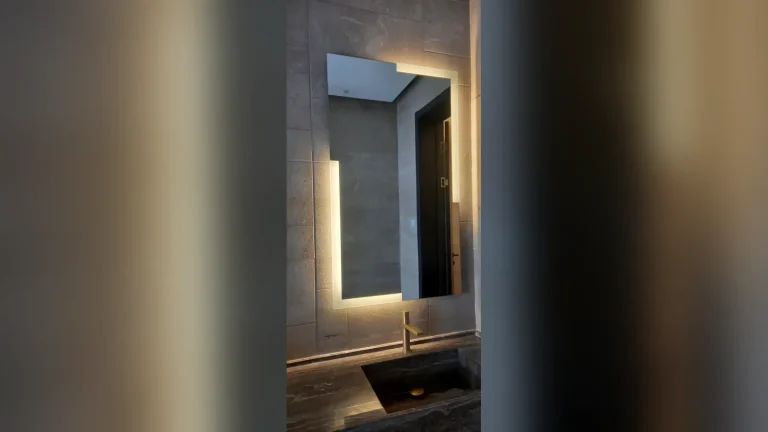
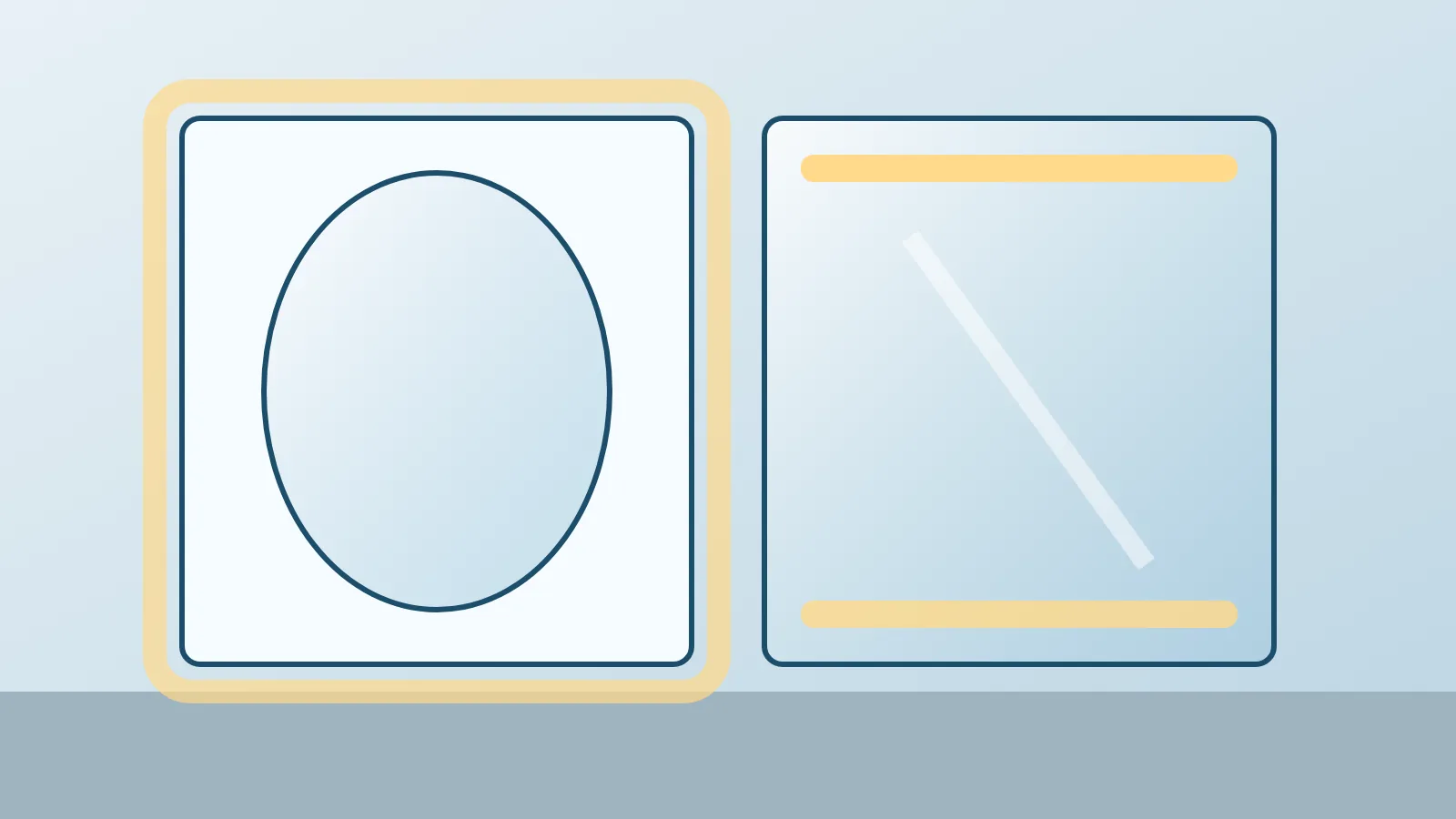
A back-lit mirror hides the light behind the glass or frame. The light shines onto the wall around the mirror and makes a soft halo. Blue Lake’s page describes simple backlit mirrors with a soft LED glow behind the mirror. The effect is calm and works well in a bathroom or on a feature wall.
The light mostly lights the wall, not your face. It is good for ambience and for a clean modern look.
How a front-lit mirror works
In general, a front-lit mirror shines light through the mirror surface or from strips at its edges toward you. The light lands on your face, so details are easier to see. This is a common choice for grooming areas and dressing tables. Blue Lake’s page does not describe front-lit designs in detail, so ask the team what is possible for your project.
Side-by-side comparison
| Point | Back-lit | Front-lit |
|---|---|---|
| Main effect | Soft halo on the wall | Light on the face |
| Best for | Ambience, feature walls, bathrooms | Shaving, make-up, dressing areas |
| Look | Floating, decorative | Clean and practical |
| Typical placement | Above a vanity or on a wall | Vanity, dressing table |
Some mirrors on the market combine both, so ask whether that is possible for your project. The final lighting style is confirmed before fabrication.
Which one for a bathroom?
If the main use is a quick wash and a pleasant room, a back-lit mirror is enough. If you shave or apply make-up at the mirror, a front-lit design helps more. In a small bathroom, think about where the mirror sits relative to the light on the ceiling.
Things to decide in both cases
- The light tone. Our article on LED mirror light colour, anti-fog and controls explains the options.
- Anti-fog, which can be included when selected for the project.
- Touch, switching and dimming controls.
- The mirror shape, such as rectangle, oval or round, and the frame finish.
Electrical planning
Both types need a power connection. Blue Lake confirms the electrical details and the position of the driver before fabrication. The LED, driver and IP-rating needs are checked for the mirror location. Read our LED mirror electrical planning guide before you decide where the mirror goes.
Placement and room layout
Where the mirror sits changes how well each lighting style works. Above a vanity, a back-lit mirror adds a soft glow onto the wall and the counter. Beside a dressing table, a front-lit design gives light exactly where you need it. In a small bathroom, check that the light does not shine straight into your eyes from the ceiling at the same time.
Think about the other lights in the room as well. If the ceiling lights are already bright and white, a warmer mirror light can make the room feel calmer. If the room has no window, a stronger front light can help with daily tasks. Our guide to the LED mirror light colour options helps match the tone to the space.
Frame, shape and finish
The lighting style works together with the frame. A slim black, bronze or gold frame adds definition around a lit mirror, while a frameless design relies on the glow itself. Oval and round shapes soften a bathroom, and rectangles suit a modern vanity. Frame colour can be coordinated with taps and shower hardware, so the room feels consistent.
Questions to bring to the first conversation
Before you speak to the team, write down how you use the mirror every day. Do you shave, apply make-up or only wash your hands? Is the room bright already? Do you like a warm or a cool light? Answers like these decide the lighting style faster than technical details. Bring photos of the wall and the vanity so the team can suggest a size and lighting layout that suits the space.
Maintenance and long-term use
LED mirrors are easy to live with. Wipe the surface with a soft cloth and a non-abrasive cleaner, and keep water away from the electrical parts. If you plan to change the bathroom later, such as a new vanity or taps, mention the mirror at the design stage, because moving a connection point is easier before the wall is finished. Ask what the written project quote says about glass, hardware and any LED or electrical components.
A short decision guide
- Want a calm, decorative glow? Choose back-lit.
- Want clear light for grooming? Choose front-lit.
- Want both looks? Ask whether a combined design is possible.
Cost factors
The price depends on the size, the shape, the lighting style and the controls. Blue Lake does not use a fixed LED mirror price list because every mirror is made to measure. Prices start from AED 1,000. The final price depends on the size, design, materials, and installation requirements. To start, contact Blue Lake with a photo of the wall.
Frequently asked questions
A back-lit mirror lights the wall behind it with a soft glow. A front-lit mirror lights your face, which helps with grooming.
A front-lit design usually gives clearer light on the face, so it is the common choice for make-up and shaving.
Anti-fog can be included when it is selected for the project.
Yes. Rectangle, oval, round, framed and custom shapes can be made around the wall and vanity.
The electrical position is planned before fabrication, and the connection should follow the requirements that apply to your property.