On this page
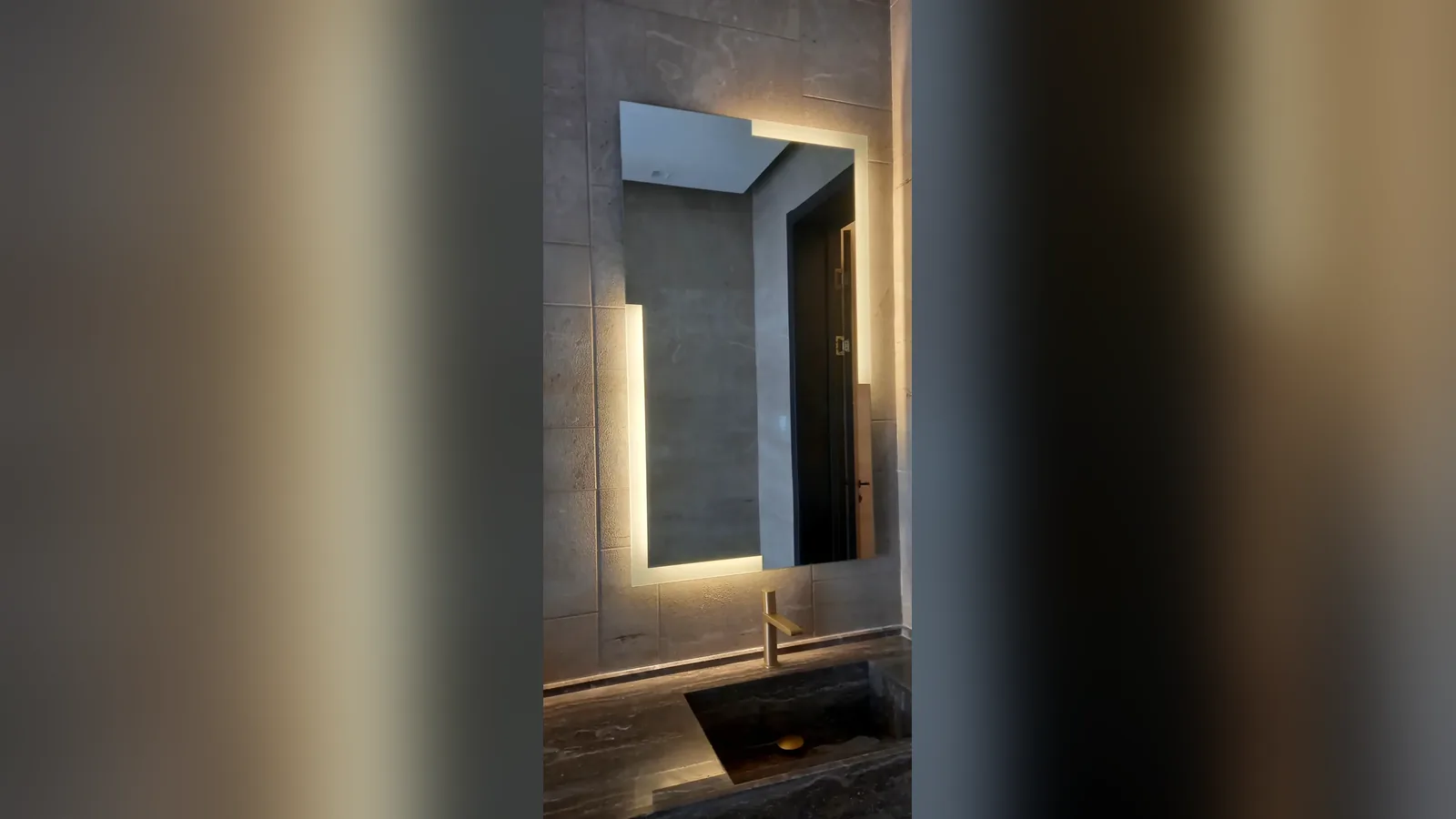
Good LED mirror electrical planning decides whether a backlit mirror looks clean on the wall or ends up with a visible cable and a switch in the wrong place. The mirror glass is the easy part. The power feed, the driver and the controls need decisions before anything is made.
Quick answer: before you order, decide where the mains power comes from, where the driver will sit, how the mirror is switched, and which openings the glass needs. Blue Lake confirms the electrical position during the site measurement and plans cut-outs before fabrication, so the mirror is made around your wall, not adjusted on the day.
This guide is for homeowners, interior designers and fit-out contractors in Dubai. For sizes and shapes, read our LED mirror guide for Dubai. For colour and anti-fog choices, see the LED mirror light colour and controls guide. The service itself is on Blue Lake’s custom LED mirrors page.
Why the electrical side needs planning first
A backlit mirror is a glass product with a lighting system behind it. Blue Lake’s service page says the lighting and electrical details are confirmed before fabrication. That order matters, because glass cannot be altered after it is made.
If the power point, the driver or a cut-out is in the wrong place, the options are limited. You may need a new mirror, a new wall chase, or a visible fix. A short checklist at the start avoids all three.
The four electrical parts to think about
1. The power feed
An LED mirror needs a suitable power connection. The page states that the required arrangement is checked for the selected mirror and location. Decide early whether the supply will come from a wall box behind the mirror, from a point beside it, or from a ceiling or vanity feed.
2. The driver
LED lighting usually runs through a driver, which converts the mains supply into the low-voltage supply the LEDs use. Blue Lake notes that driver and cable positioning, and access to the driver, are considered before fabrication and installation. Ask where it will sit and how someone can reach it later if it ever needs attention.
3. The switch and dimming
Control choices include a switch and dimming. The requirements depend on the selected lighting system and the electrical setup. A wall switch, a touch control on the mirror and a dimmer all need a different arrangement, so choose before the site visit if you can.
4. Optional anti-fog
An anti-fog demister can be added when selected and compatible with the project. It is an extra electrical element, so mention it at the start, not after the power position is fixed.
Cut-outs: sockets, switches and fixtures
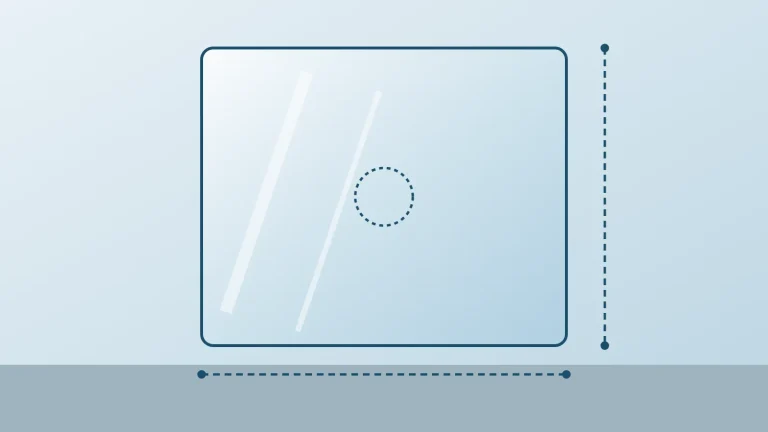
Blue Lake’s specifications list cut-outs for sockets, switches and fixtures as an item to plan in advance. Any opening needed in the mirror is prepared before fabrication. A mirror cannot be drilled or notched neatly once it is finished.
Check these points on your wall:
- Is there a socket, shaver point or switch that the mirror must go around?
- Is there a light fitting or extractor grille close to the mirror edge?
- Do taps, a basin splashback or a shelf limit the mirror height?
Blue Lake’s process includes checking the mirror position against taps, sockets and wall finishes. Photos of these details help the team plan before measurement.
Wet areas and bathrooms
Most LED mirrors go in bathrooms, so moisture matters. The service page says suitable electrical protection requirements are checked for the planned mirror location, and that the IP rating is site-specific. An IP rating describes how well a product is protected against dust and water.
Do not assume a mirror suits every spot because it fits the wall. A mirror beside a shower is a different case from one above a dry powder-room vanity. Tell the team where the mirror will go and how close it is to water, and ask for the protection details of the actual product.
A simple planning table
| Question | Why it matters |
|---|---|
| Where does the power come from? | Sets the cable route and the wall work |
| Where does the driver sit? | Needs access and space, so it is decided before fabrication |
| How is the mirror switched? | Wall switch, touch control and dimming need different set-ups |
| Is anti-fog wanted? | Adds an electrical element to the plan |
| Which openings are needed? | Cut-outs are planned before the glass is made |
| How close is water? | Protection requirements depend on the location |
Take this table to your electrician and to the site visit. Answers on paper make the measurement much quicker.
Who does the wiring?
Mains wiring should be done by a qualified electrician, and building or landlord rules may also apply. Blue Lake’s service page covers the mirror and its LED system, and says the required electrical arrangement is checked for the selected mirror and location. If you are renovating, coordinate the electrician with the glass team so the power point is ready before the mirror arrives.
What to prepare before the site visit
- A photo of the wall or vanity, taken straight on and from the side.
- Approximate width and height of the space.
- The position of the nearest power point, switch and any cables already in the wall.
- Whether you want a wall switch, a touch control, dimming or anti-fog.
- The finish of your taps and shower hardware, if you want a frame to match.
Blue Lake’s process is simple: send photos and approximate dimensions, confirm the dimensions, wall condition and electrical position at the site measurement, fabricate the agreed mirror and LED system, then install it.
What affects the cost
An LED mirror has no single price, because every mirror is made to measure. The main factors are the size, the shape, the frame, the LED layout, anti-fog, controls, cut-outs and the installation conditions. Prices start from AED 1,000. The final price depends on the size, design, materials, and installation requirements.
For a plan based on your wall, contact Blue Lake with photos and approximate measurements, and the team can confirm the electrical position at measurement.
Frequently asked questions
Yes. A suitable power connection and driver position must be considered, and Blue Lake checks the arrangement for the selected mirror and location.
Yes. Cut-outs for sockets, switches and fixtures are planned in advance, before the mirror is fabricated.
Anti-fog can be added as an option when it is compatible with the confirmed specification, so mention it at the start.
That depends on where it goes. The protection requirements are checked for the planned location, so tell the team how close the mirror is to water.
At the site measurement, before fabrication. Blue Lake confirms the final dimensions, the wall condition and the electrical position at that step.
Related Blue Lake pages
- Custom LED mirrors
- LED mirror sizes, shapes and installation guide
- LED mirror light colour, anti-fog and controls
- Contact Blue Lake